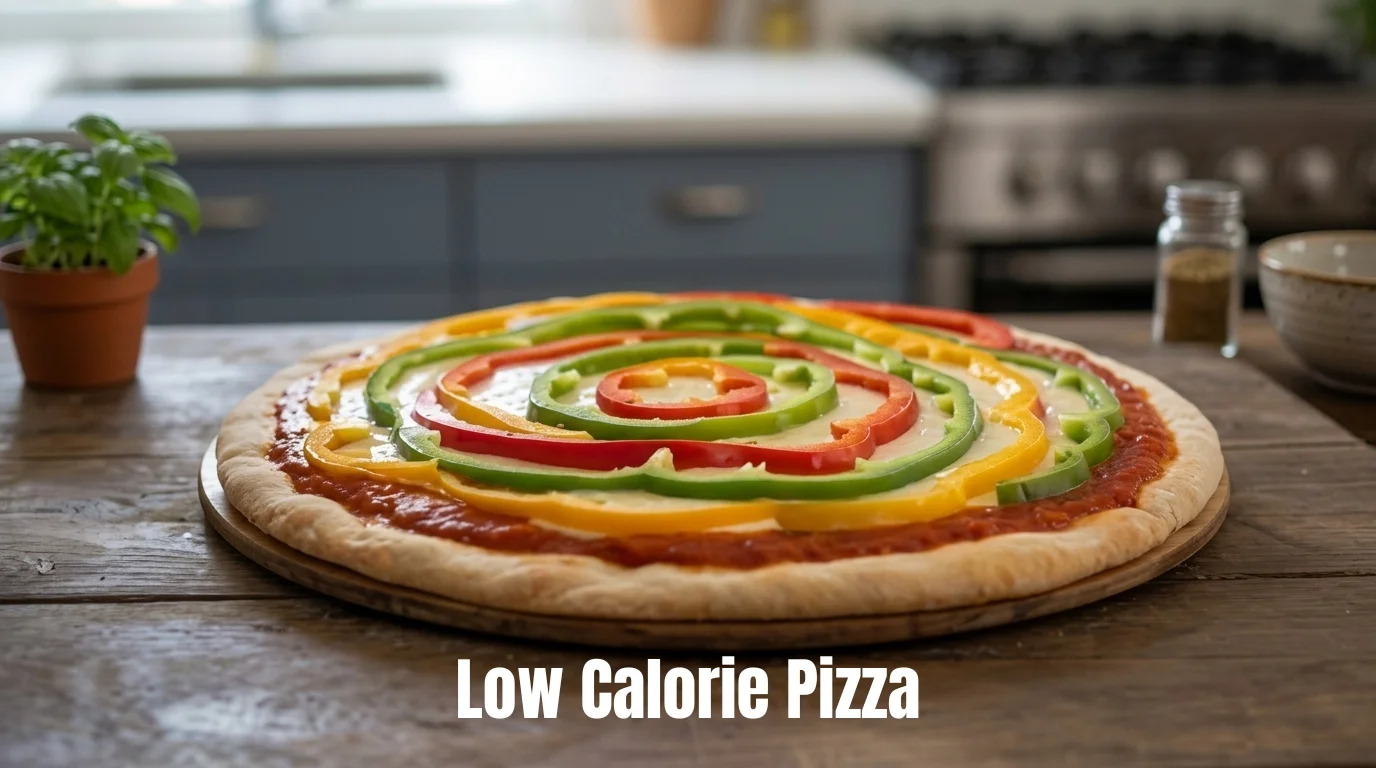
You don’t need to give up pizza to lose weight. The real solution is not restriction, it is smarter choices. Low calorie pizza is built on a simple idea: reduce unnecessary calories from crust, cheese, and oil while keeping the flavor intact through better ingredients and balance.
A regular slice of pizza often ranges between 250–400 calories, but with the right swaps, you can enjoy pizza at around 120–220 calories per serving without feeling like you’re on a diet.
This guide explains exactly how low calorie pizza works and gives you 7 recipes that taste satisfying, not diet-like. These are real-world options you can cook at home or adapt for restaurants.
What Makes a Pizza Low Calorie?
Low calorie pizza is not created by removing everything you love. Instead, it is built through balance across three key areas.
First is the crust. Traditional refined-flour crusts are calorie-dense and low in fiber, making them easy to overeat. Lighter options like thin-crust, whole-wheat bases, or cauliflower crusts reduce the calorie load while keeping the texture enjoyable.
Second is cheese usage. Cheese is one of the biggest calorie contributors in pizza. The goal is not to eliminate it, but to reduce quantity and improve quality. Using smaller portions or lighter cheeses still keeps the flavor intact.
Third is toppings. Vegetables and lean proteins help increase volume and satiety without significantly increasing calories. This is what makes low calorie pizza feel filling instead of restrictive.
A Quick Glance For Low Calorie Pizza
| Recipe | Key Ingredients | Calories (Per Slice) | Best For | Flavor Profile |
|---|---|---|---|---|
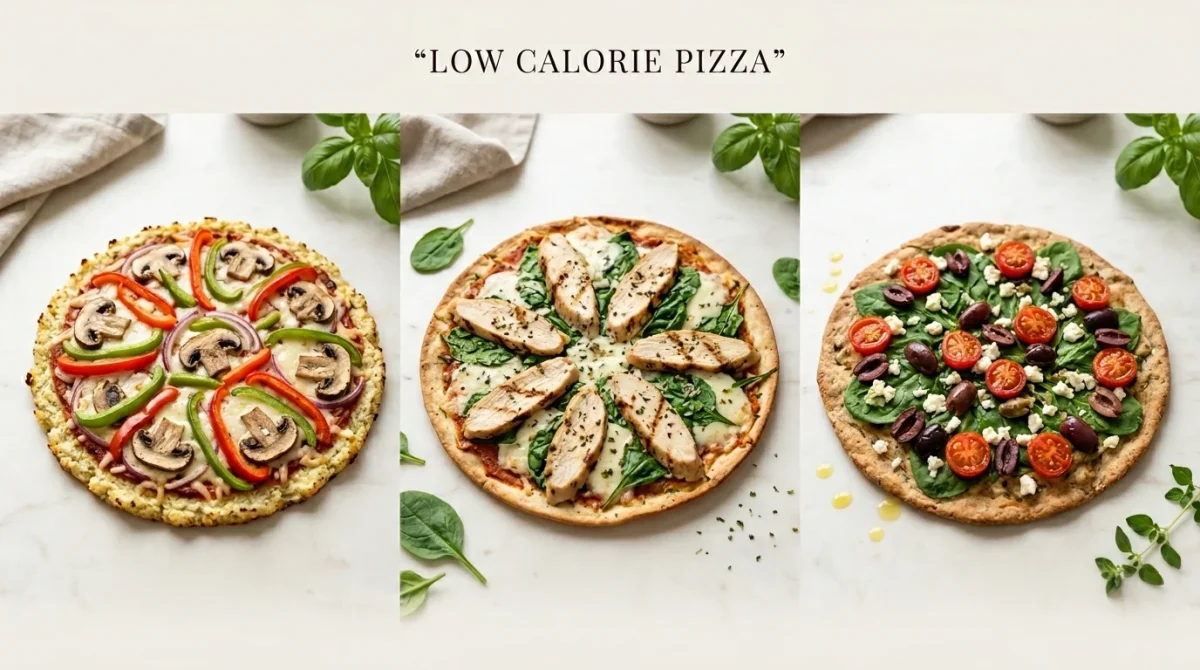
| Cauliflower Crust Veggie Pizza | Cauliflower crust, mushrooms, bell peppers, light cheese | 140–180 | Weight loss & low-carb diets | Fresh, light, slightly crispy |
| High-Protein Chicken Pizza | Whole wheat thin crust, grilled chicken, spinach | 170–220 | Muscle gain + fat loss | Savory, smoky, filling |
| Mediterranean Pizza | Thin crust, olives, feta, tomatoes, spinach | 160–210 | Balanced healthy eating | Tangy, salty, rich |
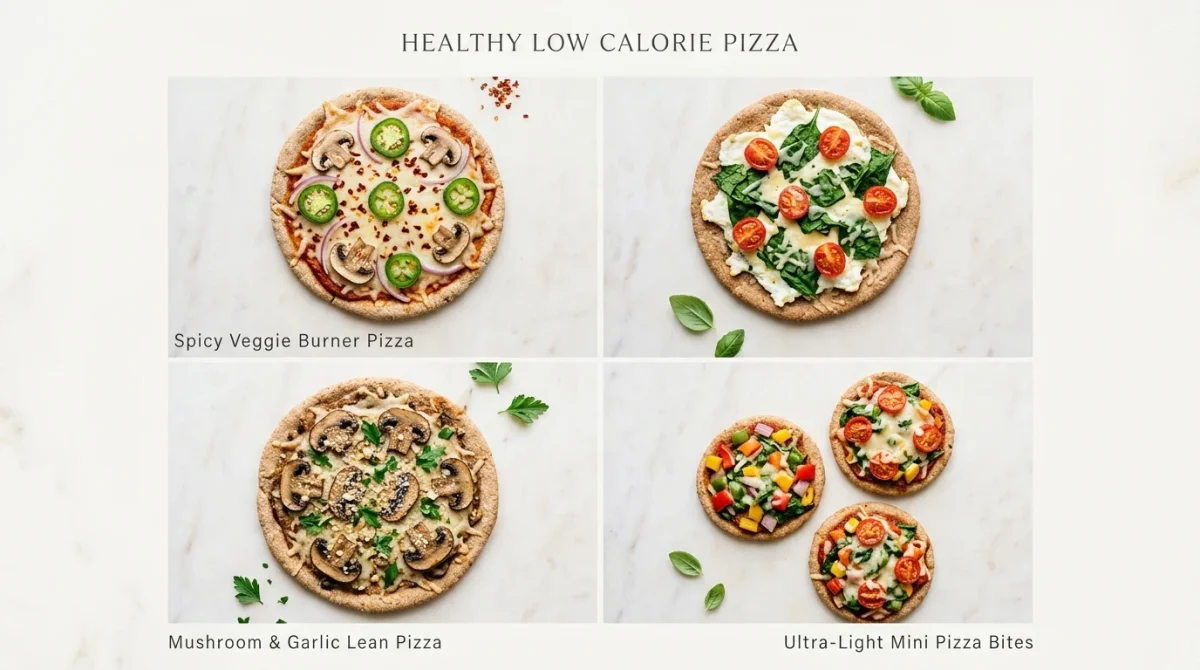
| Spicy Veggie Burner Pizza | Jalapeños, chili flakes, mushrooms, onions | 150–200 | Metabolism boost & cravings control | Spicy, bold, intense |
| Egg White Breakfast Pizza | Egg whites, whole wheat crust, spinach, tomatoes | 180–230 | Healthy breakfast option | Light, fluffy, protein-rich |
| Mushroom & Garlic Pizza | Mushrooms, garlic, parmesan, thin crust | 140–190 | Low-calorie comfort food | Umami, earthy, rich |
| Mini Pizza Bites | Whole wheat pita, veggies, light cheese | 100–140 | Snacks & portion control | Crispy, light, snackable |
Top 7 Low Calorie Pizza Recipes
1. Cauliflower Crust Veggie Pizza
This is one of the most popular low calorie options because it replaces traditional flour crust with a vegetable-based alternative. The result is a lighter base that still supports strong toppings.
It includes a sugar-free tomato sauce, mushrooms, bell peppers, onions, and a light layer of mozzarella. The vegetables increase volume, which helps you feel full faster.
Each slice typically contains around 140–180 calories, making it a strong option for weight-conscious eating without sacrificing texture or flavor.
2. High-Protein Chicken Thin Crust Pizza
This recipe focuses on protein to control hunger and reduce cravings later in the day. A thin whole wheat crust forms the base, while grilled chicken provides the main source of satiety.
Spinach and tomato sauce add freshness, while a light layer of cheese keeps calories in check. The smoky flavor from grilled chicken makes this feel like a restaurant-style meal. Each slice ranges from 170 to 220 calories, depending on portion size.
3. Mediterranean Low Calorie Pizza
The Mediterranean version uses a balance of healthy fats and vegetables. It includes cherry tomatoes, spinach, olives, and a small amount of feta cheese.
Garlic seasoning enhances flavor without adding calories, making the pizza taste rich even with lighter ingredients.
This option typically ranges from 160 to 210 calories per slice and offers a tangy, slightly salty flavor profile.
4. Spicy Veggie Burner Pizza
This pizza uses spice as its main flavor enhancer, rather than heavy cheese or oil. Jalapeños, chili flakes, onions, and mushrooms create a bold taste that feels intense without being calorie-heavy. Because spices increase perceived flavor, you naturally need less cheese and sauce. It typically contains around 150–200 calories per slice, making it ideal for people who enjoy strong flavors.
5. Breakfast Egg White Pizza
This version turns pizza into a morning-friendly meal. Egg whites provide lean protein, while spinach and tomatoes add fiber and volume.
A whole wheat crust supports steady energy release, and low-fat cheese keeps it satisfying without heaviness.
Each slice contains approximately 180–230 calories, making it a balanced breakfast option that helps reduce mid-day cravings.
6. Mushroom & Garlic Lean Pizza
This recipe focuses on umami flavor, which comes from mushrooms and garlic. Mushrooms mimic a meaty texture while remaining extremely low in calories.
A thin crust and light olive oil spray keep the base crisp without excess fat. A light Parmesan sprinkle adds depth without overwhelming the calorie count.
This pizza ranges from 140 to 190 calories per slice and delivers a rich, earthy taste.
7. Ultra-Light Mini Pizza Bites
These mini pizzas are designed for portion control. Instead of large slices, smaller bases, such as pita bread or mini crusts, are used. Tomato sauce, mixed vegetables, and a light layer of cheese make them satisfying yet low in calories. Each mini pizza contains about 100–140 calories, making them perfect for snacks or controlled cravings.
Why Low Calorie Pizza Actually Works
Low calorie pizza is effective because it follows three nutritional principles.
The first is volume eating. Vegetables increase the volume of your food without significantly increasing calories, helping you feel full with less energy intake.
The second is protein satiety. Ingredients like chicken and egg whites help regulate hunger hormones, reducing the urge to overeat later.
The third is flavor intensity. Strong spices and herbs enhance taste perception, so less cheese and oil are needed to feel satisfied.
Common Mistakes That Reduce Results
Many people unintentionally turn healthy pizza into high-calorie food, which is not beneficial for their health and fitness. One common mistake is adding too much cheese. Even low-fat cheese becomes calorie-heavy when used in excess.
Another issue is overusing oil. Since oil is extremely calorie-dense, even small amounts can significantly increase total calories. Some people also assume gluten-free pizza is automatically low in calories, which is not true, because many gluten-free crusts contain refined starches.
Finally, ignoring portion size can cancel out all benefits, even with healthy ingredients.
Smart Pizza Building Formula
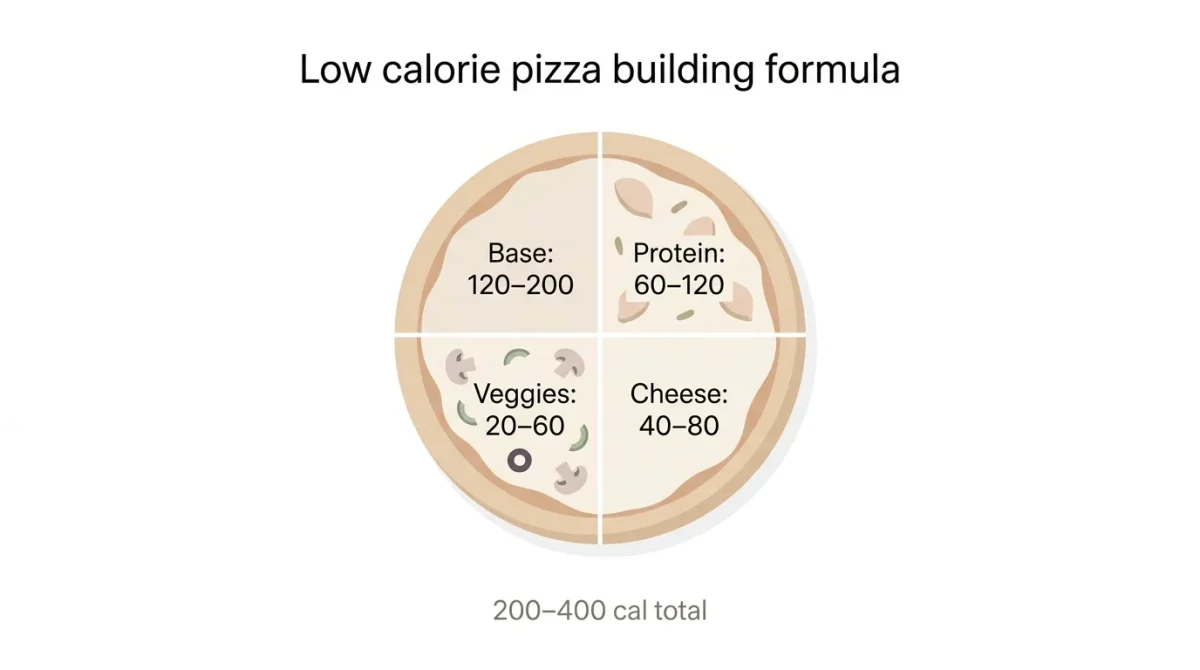
A balanced low calorie pizza can be built using a simple structure:
- Base: 120–200 calories
- Protein: 60–120 calories
- Vegetables: 20–60 calories
- Cheese: 40–80 calories
This keeps the total meal roughly between 200 and 400 calories, depending on the ingredients and portion size.
Homemade vs Restaurant Strategy
Homemade pizza gives you full control over ingredients, oil usage, and portion sizes. This makes it easier to track calories accurately and keep meals lighter.
When eating at restaurants, the strategy changes slightly. Choosing thin crust, requesting half cheese, and increasing vegetable toppings can significantly reduce calorie intake. Avoiding creamy sauces is also important, as they tend to add hidden calories quickly.
Conclusion
Low calorie pizza is not about restriction; it is about redesigning a comfort food into a smarter, more balanced meal. When you control the crust, manage cheese portions, and prioritize vegetables and lean protein, pizza becomes something you can enjoy regularly without guilt or setbacks in your health goals.
The real shift is mindset: instead of asking “What should I remove?”, ask “How can I rebuild this better?” Because in the end, sustainable eating is not about avoiding the foods you love. It is about learning how to enjoy them intelligently.
Frequently Asked Questions (FAQs)
Is low calorie pizza actually good for weight loss?
Yes, low calorie pizza can support weight loss when it is part of a calorie-controlled diet. The key is not avoiding pizza but managing portion sizes and ingredient quality. When built correctly, it helps reduce cravings while staying within your daily calorie limit.
How many calories should a low calorie pizza have?
A well-made low calorie pizza typically ranges between 120 and 220 calories per slice. For a full meal, this usually comes out to around 200–400 calories, depending on toppings and crust type. Staying within this range helps maintain a healthy calorie deficit.
Can I eat low calorie pizza every day?
Yes, you can eat it daily if it fits your overall nutrition plan. However, balance is important, so your diet should also include vegetables, protein, and whole foods. The goal is consistency, not overdependence on one food.
What is the healthiest pizza crust option?
Cauliflower crust and thin whole wheat crust are generally the healthiest choices. They reduce refined carbs and lower overall calorie density. Both options also increase fiber intake, which supports fullness and digestion.
Does removing cheese make pizza healthier?
Not necessarily, because cheese also provides flavor and protein. Instead of removing it completely, reducing the amount is a better strategy. This keeps the pizza satisfying while significantly lowering calorie intake.