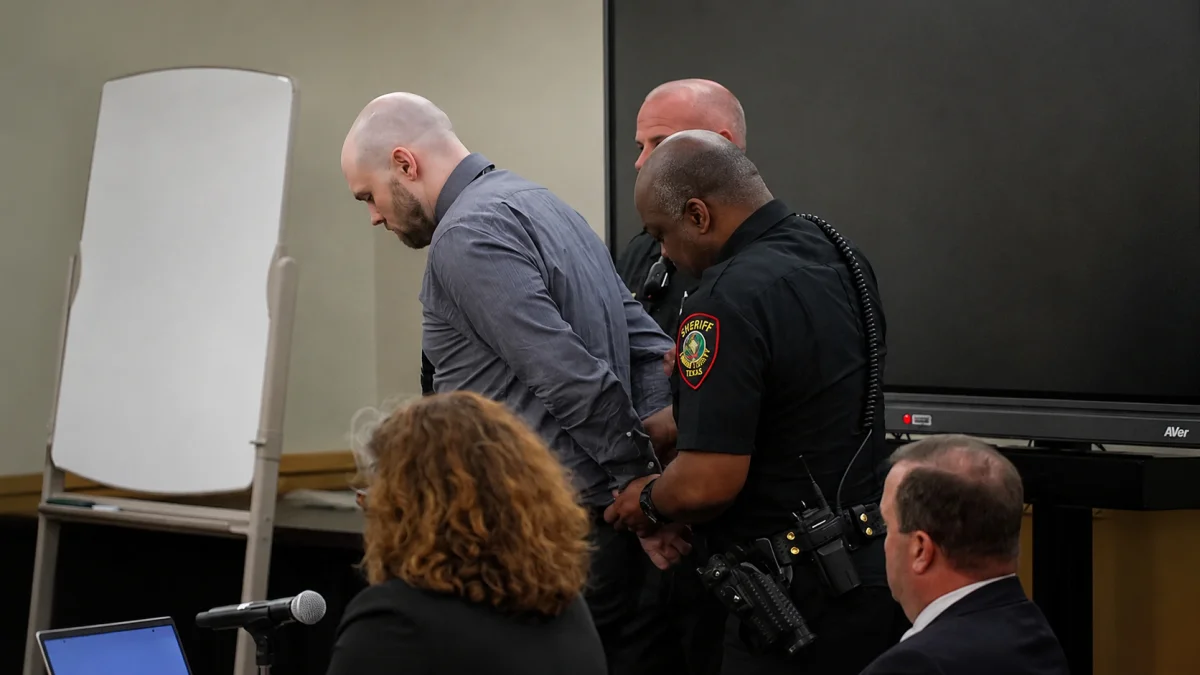
The case of Tanner Horner has become one of the most disturbing criminal trials in recent U.S. history, combining brutality, emotional courtroom testimony, and a decisive legal outcome that continues to spark national debate.
A Crime That Began With a Routine Delivery
In November 2022, what should have been an ordinary delivery turned into a horrifying tragedy. Horner, then a FedEx driver, arrived at a home in Paradise, Texas, carrying a Christmas package. Instead of leaving, he abducted 7-year-old Athena Strand from her driveway.
Prosecutors revealed that Horner initially claimed the incident began as an accident; he said he struck the child with his delivery vehicle. But evidence later showed that the situation escalated into a calculated and violent crime.
Athena’s disappearance triggered a massive search effort involving hundreds of volunteers. Her body was discovered two days later, miles from her home.
Read more: Capital One Settlement Approved
Disturbing Evidence Presented in Court
During the trial, jurors were confronted with deeply disturbing evidence, including audio and video recordings from inside Horner’s delivery truck. These recordings captured Athena’s final moments, including her cries for help.
Medical testimony confirmed that the child suffered multiple forms of violence, including blunt force trauma, smothering, and strangulation.
Prosecutors described Horner as a continuing threat to society, highlighting patterns of deception and previously alleged violent behavior.
Guilty Plea and a Rapid Path to Sentencing
In April 2026, Horner pleaded guilty to capital murder and aggravated kidnapping, effectively removing any doubt about responsibility.
This shifted the trial’s focus to a single question: Should he receive life imprisonment without parole, or the death penalty?
After weeks of testimony and just hours of deliberation, the jury delivered its answer: death by lethal injection.

Emotional Courtroom Moments
The sentencing phase was marked by powerful victim impact statements. Athena’s family addressed Horner directly, expressing grief, anger, and a desire for justice.
One of the most widely reported moments came when a family member told Horner he would “face the wrath of God,” reflecting the deep emotional toll of the crime.
Despite the intensity of the proceedings, Horner reportedly showed little to no emotion as the sentence was read.
Read more: OPEC Decision Triggers
Defense Arguments and Rejection by Jury
Defense team of Tanner Horner attempted to avoid the death penalty by citing mental health conditions, including autism spectrum disorder, bipolar disorder, and brain damage.
They argued these factors reduced his culpability and warranted a life sentence instead. However, the jury ultimately rejected this argument, concluding that Horner posed an ongoing danger.
What Happens Next?
Under Texas law, death penalty cases automatically enter an appeals process, meaning Tanner Horner execution will not occur immediately.
The case is expected to remain in the legal system for years, but the verdict itself has already left a lasting impact.

Why the Tanner Horner Case Matters
It also stands as a tragic reminder of how quickly ordinary moments can turn into unimaginable loss. This case goes beyond a single crime; it has raised broader questions about:
- The safety of home deliveries
- The use of the death penalty in extreme cases
- The role of mental health in criminal sentencing
Read more: Gabe Newell Reveals 3 Shocking Secrets
Final Take
The story of Tanner Horner is not just about a verdict; it’s about justice, grief, and the limits of human understanding in the face of cruelty.
While the court has delivered its decision, the emotional and societal impact of this case will continue to resonate far beyond the courtroom.
Athena’s family has said that the package Horner had dropped off was a Christmas present for her, a box of You Can Be Anything Barbies.
The trial was moved from rural Wise County to Fort Worth after Tanner Horner attorneys argued that he would not have received a fair trial.









+Sentenced+to+Death+in+Shocking+Child+Athena+Strand+Murder+Case)
+Sentenced+to+Death+in+Shocking+Child+Athena+Strand+Murder+Case&description=&image=https://whatinsights.com/wp-content/uploads/2026/05/tanner-horner-death-sentence-courtroom-verdict-1024x576.webp)