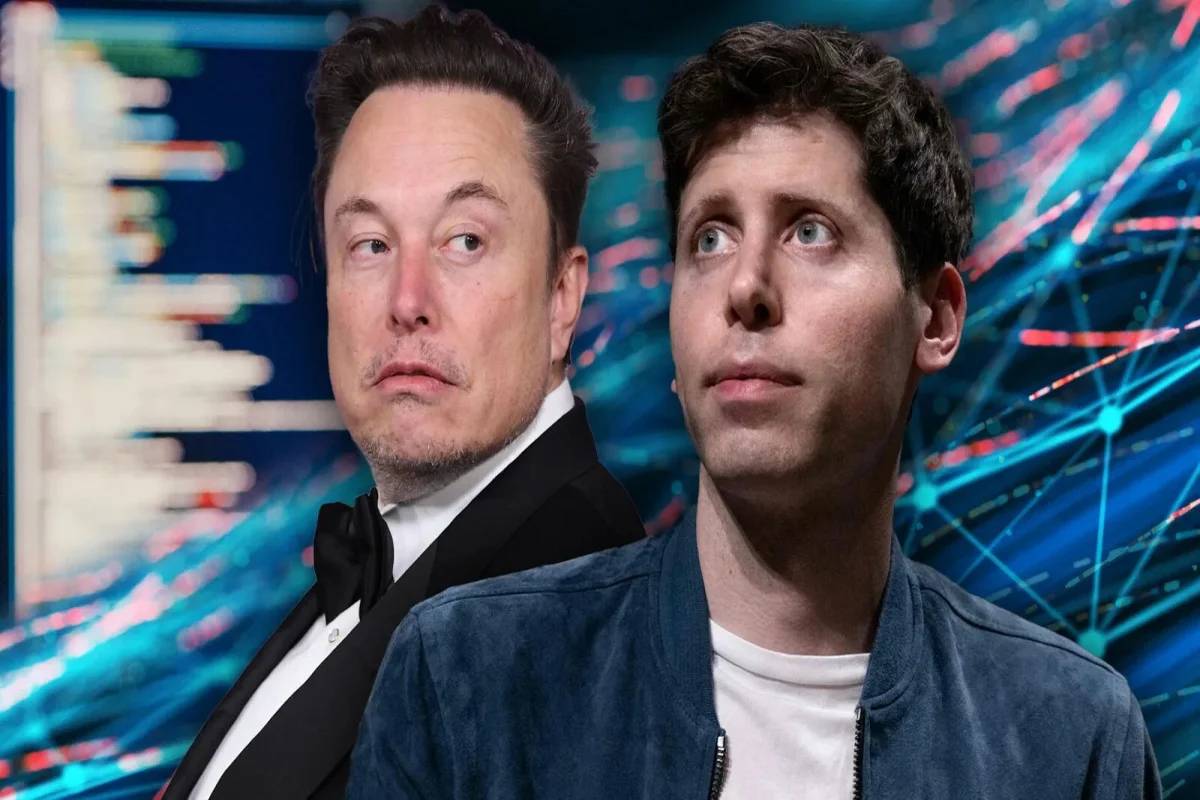
The legal battle between Sam Altman and Elon Musk is no longer just a corporate dispute. It has become a public unraveling of OpenAI’s internal culture, leadership struggles, and billion-dollar power plays.
What began as a mission to build safe artificial intelligence for humanity is now under scrutiny in federal court amid leaked messages, executive testimony, and accusations of deception. The lawsuit, filed by Musk against OpenAI and its leadership, is exposing years of conflict inside one of the world’s most influential AI companies.
From Partners to Rivals
Back in 2015, Elon Musk and Sam Altman helped launch OpenAI as a nonprofit research organization focused on developing artificial intelligence responsibly. Musk reportedly invested tens of millions of dollars during the company’s early years and publicly supported its mission to keep AI development aligned with public benefit rather than corporate profit.
But over time, OpenAI evolved into a commercial AI powerhouse. The company’s partnership with Microsoft and the explosive success of ChatGPT transformed it into one of the most valuable firms in tech. Musk argues that this transition violated OpenAI’s founding principles and enriched executives while abandoning the nonprofit vision that originally attracted his support.
OpenAI strongly denies those accusations. The company claims Musk was aware of discussions around restructuring and only turned against OpenAI after losing influence within the organization.
Court Testimony Reveals Internal Turmoil
The courtroom proceedings have pulled back the curtain on OpenAI’s internal operations in dramatic fashion. Former OpenAI CTO Mira Murati testified that Sam Altman created “chaos” and distrust among senior executives. According to testimony, Altman allegedly gave different information to different leaders, making coordination inside the company increasingly difficult.
Murati’s statements are especially significant because she briefly served as interim CEO during Altman’s shocking removal in late 2023. That leadership crisis nearly tore OpenAI apart, with employees threatening mass resignations before Altman was ultimately reinstated.
Court documents and testimony suggest the company’s leadership struggled with transparency, governance, and internal trust during one of the fastest growth periods in AI history. The revelations have fueled broader questions about whether OpenAI expanded too quickly without sufficient oversight.
Greg Brockman’s Billions Become a Flashpoint
One of the most talked-about courtroom moments came when OpenAI president Greg Brockman reportedly disclosed that his stake in the company is worth nearly $30 billion. Musk’s legal team argues this illustrates how dramatically the company shifted away from its nonprofit roots toward private wealth creation.
Additional testimony referenced financial arrangements and executive deals that Musk claims were never fully disclosed to him during OpenAI’s restructuring years. Those allegations have become central to Musk’s argument that OpenAI’s leadership misrepresented the organization’s long-term direction.
OpenAI’s defense counters that these claims ignore the economic realities of competing in the modern AI race, where massive investment is required to build advanced systems.
Read more: Ted Turner Dies at 87
The Sam Altman Leadership Debate
The trial is also reigniting long-standing questions about Sam Altman’s management style. Former board members and executives have previously accused Altman of withholding information and of aggressively managing internal politics. During the latest proceedings, those concerns resurfaced through testimony describing a culture of confusion and competing narratives among top executives.
Despite the criticism, Altman remains widely respected across Silicon Valley for transforming OpenAI into the face of the AI revolution. Under his leadership, ChatGPT became one of the fastest-growing consumer technologies ever launched, helping position OpenAI at the center of the global AI economy.
Supporters argue that the speed of AI development requires aggressive decision-making and unconventional leadership. Critics believe that the same culture created instability inside the company.
Elon Musk’s Bigger Warning About AI
For Musk, the lawsuit is about more than contracts or corporate governance. During testimony, Musk warned that advanced AI systems could become dangerous if profit incentives outweigh safety concerns. He reportedly referenced a potential “Terminator”- style situation when discussing the risks of uncontrolled artificial intelligence.
Musk has increasingly positioned himself as both an AI competitor and an AI critic. After leaving OpenAI years ago, he launched xAI to compete directly in the generative AI market. That dual role has led OpenAI’s legal team to argue that Musk’s lawsuit is motivated partly by competitive business interests.
Still, the trial has amplified an important debate within the tech industry: Should AI companies prioritize rapid innovation, or should they move more cautiously to reduce long-term risks?
Read more: Google Stock Surges 5% in Shocking Rally
Why This Trial Matters Beyond Silicon Valley
The OpenAI lawsuit could reshape how future AI companies are governed. The case is forcing courts, investors, and regulators to examine whether nonprofit AI organizations can ethically transition into profit-driven businesses while still claiming to serve humanity’s interests. It is also raising concerns about accountability in companies developing increasingly powerful technologies.
The outcome could influence future AI regulation, investor expectations, and even the relationship between founders and the organizations they help create. For now, the trial continues to expose private conversations, leadership tensions, and strategic disagreements that were once hidden behind OpenAI’s carefully managed public image.
What started as an ambitious collaboration between Sam Altman and Elon Musk has evolved into one of the most consequential power struggles in modern technology — a courtroom battle that may ultimately shape the future of artificial intelligence itself.