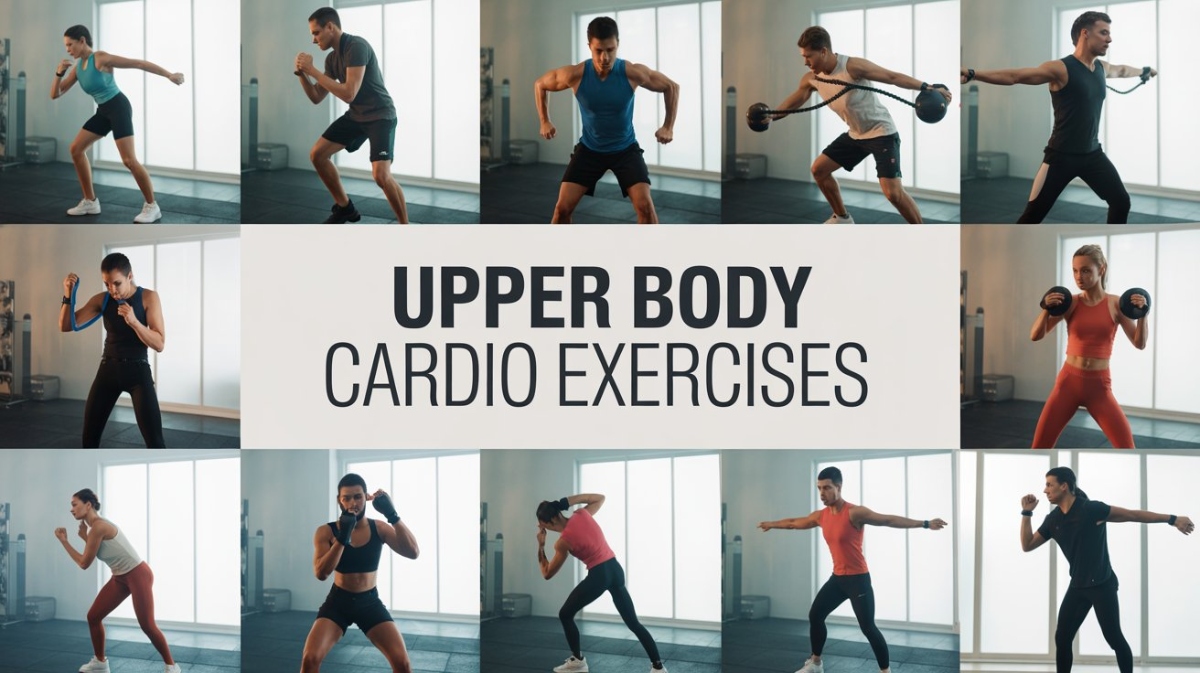
When cardio comes to mind, it’s usually jogging, cycling, or stair climbing—activities dominated by the legs. But upper body cardio exercises are an underrated yet powerful method of boosting heart rate, torching calories, and developing strength in your arms, chest, shoulders, and back.
Upper body cardio offers a dynamic and effective solution, whether recovering from a lower-body injury, seeking variety in your routine, or aiming to challenge your cardiovascular system in new ways.
Why Upper Body Cardio Matters
Focusing on the upper body during cardio delivers unique fitness benefits:
- Enhances cardiovascular endurance through upper-body-driven movements
- Builds muscle endurance in the arms, shoulders, chest, and upper back
- Offers a training alternative for those unable to perform lower-body exercises
- Promotes a more balanced fitness approach, engaging often-overlooked muscle groups
- Delivers significant calorie burn with the right intensity and structure
By redirecting cardio output to the upper body, you not only gain a change in movement pattern but also target muscles frequently neglected in standard cardio.
Sample 10-Minute Upper Body Cardio Circuit
| Minute | Exercise |
|---|---|
| 1 | Shadow Boxing with Dumbbells |
| 2 | Push-Up Hold + Shoulder Taps |
| 3 | Speed Punches |
| 4 | Rest or March in Place |
| 5 | Battle Ropes or Shadow Boxing |
| 6 | Medicine Ball Slams |
| 7 | Arm Circles with Resistance Band |
| 8 | Push-Up to Plank Jacks |
| 9 | Speed Punches (fast finish) |
| 10 | Cool Down Stretch |
Top Upper Body Cardio Exercises
Here are some highly effective movements designed to raise your heart rate, mostly using the upper body. Most require minimal or no equipment and can be modified for any fitness level.

1. Shadow Boxing
A full-body cardio move focusing on fast punches and controlled footwork. Great for improving coordination and endurance.
- Targets: Arms, shoulders, core
- Equipment: None
- Tip: Mix up punch combinations and footwork to maintain pace and intensity
2. Speed Punches
Rapid punches aimed forward or into the air. Increase the challenge by using light dumbbells.
- Targets: Deltoids, chest, triceps
- Equipment: Optional lightweights
- Tip: Use timed intervals (30–60 seconds) for maximum cardio effect
3. Battle Ropes
An explosive, high-energy workout involving continuous wave or slam motions.
- Targets: Arms, shoulders, back, core
- Equipment: Battle ropes
- Tip: Keep knees soft and core braced to ensure good form
4. Push-up to Plank Jacks
Combines upper-body strength with cardio intensity through fluid transitions between push-ups and plank jacks.
- Targets: Chest, shoulders, triceps, core
- Equipment: Mat (optional)
- Tip: Maintain good form; start slow and increase speed gradually
5. Medicine Ball Slams
It is an aggressive movement that blends power and endurance by repeatedly slamming a ball to the ground.
- Targets: Lats, shoulders, arms, core
- Equipment: Medicine ball (non-bouncing)
- Tip: Exhale as you slam for rhythm and power efficiency
6. Arm Circles with Resistance Bands
This deceptively simple movement increases blood flow and endurance in the upper arms and shoulders.
- Targets: Shoulders, upper arms
- Equipment: Optional resistance band
- Tip: Perform in both directions for 30–60 seconds per set
7. Shadow Boxing with Dumbbells
A high-speed punching movement is enhanced with light dumbbells for resistance. This boosts both strength and cardio endurance.
- Target Areas: Shoulders, biceps, triceps, core
- Equipment: 1–3 lb dumbbells
- Tip: Maintain control; avoid locking elbows at full extension.
8. Push-Up Hold + Shoulder Taps
Begin in a push-up position, hold your core tight, and tap each shoulder with the opposite hand—a fantastic combo of strength and stability.
- Target Areas: Chest, shoulders, triceps, core
- Equipment: None
- Tip: Avoid swaying your hips for maximum core engagement.
9. Speed Punches
Perform rapid-fire punches in the air for timed intervals. Use light dumbbells for added resistance.
- Target Areas: Deltoids, triceps, upper chest
- Equipment: Optional dumbbells
- Tip: Focus on speed and rhythm rather than force.
10. Cool Down Stretch
End your session with gentle stretches targeting shoulders, chest, arms, and upper back.
- Target Areas: Entire upper body
- Equipment: Mat (optional)
- Tip: Hold each stretch for at least 20 to 30 seconds while breathing deeply.
Quick Reference Table
| Exercise | Primary Muscles Targeted | Equipment Needed | Intensity Level |
|---|---|---|---|
| Shadow Boxing with Dumbbells | Arms, shoulders, core | Light dumbbells | Moderate–High |
| Push-Up Hold + Shoulder Taps | Chest, shoulders, core | None | Moderate |
| Speed Punches | Deltoids, triceps, chest | Optional dumbbells | Moderate–High |
| Battle Ropes | Arms, shoulders, back | Battle ropes | High |
| Medicine Ball Slams | Back, shoulders, arms, core | Medicine ball | High |
| Arm Circles with Resistance Band | Shoulders, upper arms | Resistance band (optional) | Low–Moderate |
| Push-Up to Plank Jacks | Chest, triceps, core | Mat (optional) | High |
| Cool Down Stretch | Full upper body | None | Low |
Final Thoughts
Upper body cardio exercises are an innovative, efficient way to challenge your heart and muscles without relying on your legs. Whether you’re pressed for time, limited by injury, or simply need a break from the usual, these movements can refresh your routine and deliver excellent results. Focusing on pace, form, and consistency will unlock a new level of endurance and strength.
Frequently Asked Questions (FAQs)
1. Can cardio workouts focus only on the upper body?
Yes. These routines raise your heart rate and improve endurance, like leg-focused cardio.
2. What equipment do I need?
Most movements require none, but battle ropes, dumbbells, bands, or a medicine ball can add variety and challenge.
3. Is upper body cardio helpful for weight loss?
Absolutely. When paired with healthy eating, it boosts calorie burn, promotes lean muscle growth, and supports fat loss.
4. How often should I include it?
Aim for 2–3 sessions per week, depending on your goals and full-body workout schedule.
5. Can beginners try these exercises?
Yes. Start with basic, no-equipment movements like arm circles or shadow boxing and progress gradually.
6. Is this type of cardio ideal during leg injury recovery?
Yes. It’s smart to stay active, preserve fitness, and support healing without straining your lower body.
7. Is it enough for full-body conditioning?
It’s best used as part of a lower body, mobility, and core training routine.