Few cases in modern American history have sparked as much debate, legal scrutiny, and cultural division as the Kyle Rittenhouse case. From a chaotic August night in Kenosha, Wisconsin, in 2020, to a nationally televised murder trial, to a full acquittal and a subsequent life in gun-rights advocacy, Rittenhouse has become one of the most polarizing figures in contemporary American public life.
This comprehensive guide cuts through the noise. Whether you’re here to understand the legal arguments, the events of that night, the trial’s outcome, or what Kyle Rittenhouse has been doing since, this is the only resource you need.
Who Is Kyle Rittenhouse?
Kyle Howard Rittenhouse was born on January 3, 2003, in Antioch, Illinois. He grew up in a working-class family across the state line from Kenosha, Wisconsin, a city roughly 20 miles from his home. By his mid-teens, he had shown a deep interest in law enforcement, participating in local police cadet programs and expressing strong public support for law enforcement on social media under hashtags like Blue Lives Matter.
At 17 years old, Rittenhouse was not yet legally permitted to purchase a firearm in Illinois. He worked part-time as a lifeguard and had no significant criminal history before the events of August 2020. His character before Kenosha is a contested subject: supporters describe him as a patriotic, community-minded young man; critics argue his social media posts and affiliations with militia-adjacent groups reflected a dangerous degree of political radicalization.
What is not contested is that on the night of August 25, 2020, Rittenhouse drove to Kenosha armed with an AR-15-style semi-automatic rifle, and that by the end of that night, two people were dead and one was critically injured.
The Context: Kenosha, Jacob Blake, and the Protests
To understand the Kenosha shootings, you must first understand why Kenosha was on fire.
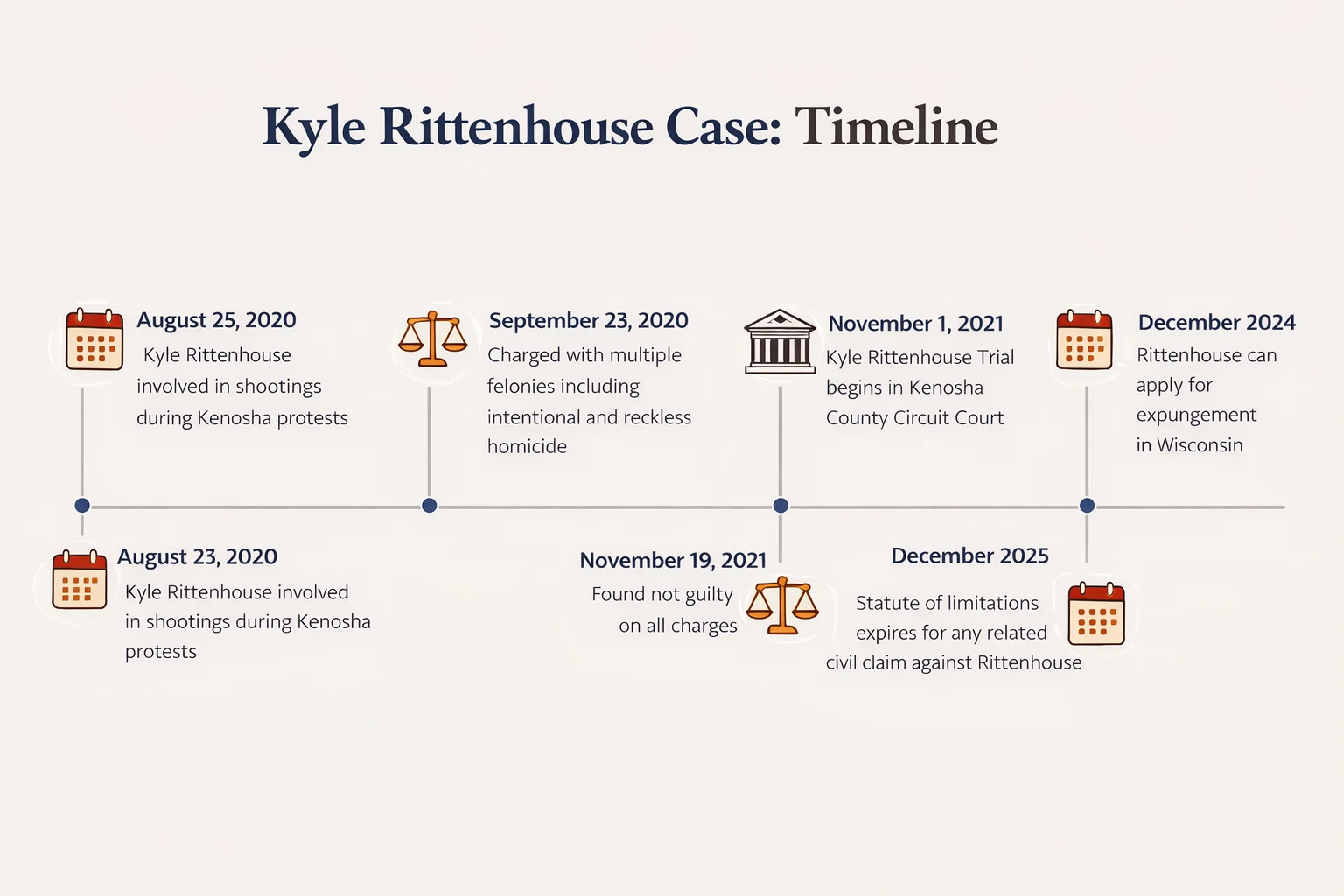
On August 23, 2020, a Kenosha Police Department officer named Rusten Sheskey shot Jacob Blake, a 29-year-old Black man, seven times in the back during an arrest attempt. Blake survived but was left paralyzed from the waist down. The shooting was captured on bystander video and went viral almost immediately, igniting massive protests in Kenosha and sparking demonstrations across the United States, already gripped by months of Black Lives Matter protests following the murder of George Floyd.
Over the next two nights, August 23 and 24, Kenosha saw significant civil unrest. Buildings were set on fire. A car dealership was vandalized and burned. Property damage was extensive, and local law enforcement struggled to contain the situation. Governor Tony Evers declared a state of emergency and activated the National Guard.
By the time Kyle Rittenhouse drove to Kenosha on the night of August 25, the city was in its third consecutive night of unrest. It was into this volatile environment with a declared curfew in effect that a 17-year-old arrived with a military-style rifle and a medical kit, saying he was there to protect property and provide first aid.
What Happened on August 25, 2020: A Detailed Timeline
Understanding the sequence of events on that night is essential to understanding both the trial and the verdict.
How Rittenhouse Got His Rifle
Rittenhouse was too young to legally purchase a firearm in Illinois. Three months before the shooting, his friend Dominick Black, who was 18 at the time, purchased the Smith & Wesson AR-15-style semi-automatic rifle on Rittenhouse’s behalf using money Rittenhouse had saved. Black’s stepfather stored the weapon in Kenosha.
On August 24, 2020, the day before the shooting, the weapon was moved from a locked safe to an unsecured location in the stepfather’s basement, in anticipation of potential break-ins during the unrest. The next evening, Rittenhouse collected the rifle and joined a group of armed individuals patrolling the streets of Kenosha, saying they were there to protect businesses.
The First Shooting: Joseph Rosenbaum
Joseph Rosenbaum, a 36-year-old Kenosha resident, became involved in a confrontation with Rittenhouse in a parking lot. Witnesses and video evidence showed Rosenbaum chasing Rittenhouse. Rosenbaum threw a plastic bag at Rittenhouse and, according to trial testimony, lunged for the barrel of his rifle. Rittenhouse fired four shots at close range, killing Rosenbaum.
Notably, prosecution witnesses during the trial corroborated key elements of Rittenhouse’s account — including that Rosenbaum had been hyper-aggressive that evening and had made threats. Prior to the shooting, Rosenbaum reportedly said: “If I catch you alone tonight, I will fucking kill you.”
The Chase and the Second and Third Shootings
After shooting Rosenbaum, Rittenhouse fled the scene and called a friend. A crowd began to pursue him, with some shouting that he had shot someone. During this chase:
- An unidentified individual struck Rittenhouse with a kick. He stumbled and fell to the ground.
- Anthony Huber, a 26-year-old from Silver Lake, struck Rittenhouse in the head with a skateboard and attempted to grab his rifle. Rittenhouse shot him once, fatally.
- Gaige Grosskreutz, 26, who was armed with a Glock pistol and later testified he held an expired concealed carry permit (though 2024 local reporting revealed he actually had a valid permit at the time), advanced on Rittenhouse with the pistol raised. Rittenhouse shot him once in the arm, severing most of his bicep.
Rittenhouse then walked toward the police with his hands raised. Officers, responding to reports of an active shooter, initially did not detain him. He drove back to Antioch, Illinois, that night and turned himself in to the police the next day.
The Charges Against Kyle Rittenhouse
The most serious charge, first-degree intentional homicide, carried a mandatory life sentence if Rittenhouse were convicted. Facing these charges, he pleaded not guilty on all counts, asserting self-defense. Kenosha County prosecutors charged Rittenhouse with seven counts:
- First-degree intentional homicide (for the death of Anthony Huber)
- First-degree reckless homicide (for the death of Joseph Rosenbaum)
- Attempted first-degree intentional homicide (for the shooting of Gaige Grosskreutz)
- Two counts of first-degree recklessly endangering safety (for putting other people in danger)
- Unlawful possession of a dangerous weapon by a minor.
- Failure to comply with an emergency order (curfew violation)
The Trial: November 1–19, 2021
The trial of Kyle Rittenhouse began on November 1, 2021, in Kenosha County. It was nationally televised and attracted saturation media coverage. Judge Bruce Schroeder presided.
The Prosecution’s Case
Lead prosecutor Thomas Binger framed Rittenhouse as a dangerous, self-styled vigilante who had deliberately inserted himself into a volatile situation with a semi-automatic weapon, created the conditions for violence, and then used the very danger he’d manufactured as a justification for deadly force.
The prosecution’s central argument is that you cannot provoke a confrontation and then claim self-defense. Binger repeatedly showed the jury a drone video filmed from over a block away, arguing it showed Rittenhouse raising his weapon at demonstrators before Rosenbaum began to chase him.
You lose the right to self-defense when you’re the one who brought the gun, when you are the one creating the danger, when you’re the one provoking other people, Binger told the jury in closing arguments.
The prosecution also argued that Rittenhouse, a minor from another state, had no legal or moral business being in Kenosha with an assault rifle.
The Defense’s Case
Lead defense attorney Mark Richards took a sharply different approach, urging the jury repeatedly to use common sense. The defense built a disciplined, unified narrative: Rittenhouse was a community-minded young man who came to help, was attacked by volatile individuals, and had no realistic choice but to shoot to save his own life.
Key defense arguments included:
- Rosenbaum’s aggression was established: Multiple witnesses confirmed Rosenbaum had been volatile and threatening earlier that evening, reducing the plausibility that Rittenhouse had provoked him.
- The video corroborated Rittenhouse: Video evidence showed Rittenhouse running away before each shooting, a critical fact for establishing he was not the aggressor.
- Grosskreutz’s own testimony helped the defense: The surviving victim admitted during cross-examination that Rittenhouse did not fire until after Grosskreutz had pointed his pistol at Rittenhouse. This moment was widely considered the most damaging testimony for the prosecution.
- Wisconsin self-defense law favors the defendant: Once a defendant asserts self-defense, the burden shifts to the prosecution to disprove it beyond a reasonable doubt, a very high standard.
Rittenhouse Takes the Stand
In a move considered risky but ultimately effective, Rittenhouse testified in his own defense. He broke down in tears on the stand, a moment that became iconic in the trial’s media coverage. He described his fear during each encounter and maintained that he fired only when he believed he would be killed or seriously injured.
Legal experts noted that Rittenhouse did not come off as smug or indignant and successfully presented himself as a scared teenager rather than a calculating gunman, an important emotional distinction for the jury.
Key Rulings by Judge Schroeder
Judge Bruce Schroeder made several significant rulings during the trial that shaped its outcome:
- He dismissed the curfew violation charge during the trial, citing insufficient evidence from the prosecution.
- He dismissed the unlawful possession of a firearm charge, ruling that Wisconsin’s law prohibiting minors from carrying rifles applied only to short-barreled firearms. Because Rittenhouse’s rifle barrel exceeded 16 inches, the statute did not apply.
- He ruled that the prosecution could not refer to those shot as victims, a decision that drew sharp criticism from legal scholars, who argued it unfairly prejudiced the framing of the case.
The dismissal of the weapons charge was particularly consequential: had it stood, Rittenhouse would have had a much harder time arguing he was lawfully present and equipped.
The Verdict: Not Guilty on All Counts
On November 19, 2021, after approximately 27 hours of deliberation over four days, the jury returned a unanimous verdict: not guilty on all remaining charges. The courtroom erupted. Rittenhouse wept openly. Outside, protesters gathered. The verdict immediately became front-page news across the world.
Legal Analysis: Why the Acquittal Was Not Surprising to Experts
Despite the intense political emotion surrounding the case, legal experts across the ideological spectrum largely agreed that the acquittal, while controversial, was defensible under Wisconsin law.
The burden of Proof Problem
In Wisconsin, once a defendant raises a self-defense claim, the prosecution must disprove it beyond a reasonable doubt. This is an exceptionally demanding standard, particularly when multiple videos showed Rittenhouse being chased and physically attacked before each shooting.
The Provocation Question was Murky
The prosecution’s primary argument was that Rittenhouse had provoked the initial encounter with Rosenbaum by raising his weapon. But the key video evidence for this, the drone footage, was shot from a considerable distance, making the alleged weapon-raising inconclusive.
Prosecution Witnesses Undermined the Prosecution
Most unusually, several witnesses called by the prosecution testified in support of the defense’s narrative, particularly regarding Rosenbaum’s aggressiveness and Grosskreutz’s pointing his pistol.
Harvard Law’s retired federal judge Nancy Gertner offered a more critical analysis, arguing that Judge Schroeder’s rulings, particularly allowing the defense to characterize the victims as “rioters” and “arsonists,” had effectively put the victims on trial rather than Rittenhouse.
The Racial and Political Dimensions
One of the most striking facts about the Kenosha shootings is that Rittenhouse, Rosenbaum, Huber, and Grosskreutz were all white. Yet the case became deeply entangled with questions of race in America.
This is because the precipitating event, the shooting of Jacob Blake, was a racial justice inflection point. The protests Rittenhouse walked into were explicitly about systemic racism and police violence against Black Americans. Critics argued that the sight of a white teenager being acquitted for killing two people at a racial justice protest, while walking past law enforcement who initially did not stop him, was itself evidence of racial double standards in the American justice system.
Supporters countered that the racial identities of those involved were legally irrelevant, and that applying racial analysis to the case was a politically motivated distortion of what was, legally, a straightforward self-defense question.
An Economist/YouGov poll conducted during the trial captured the political divide: roughly two-thirds of Republicans believed Rittenhouse should be acquitted, while about three-quarters of Democrats believed he should be convicted. Rittenhouse had become a Rorschach test for deeply held beliefs about guns, race, protests, and justice.
Reactions to the Verdict
Political Reactions
The verdict generated immediate and intense political reaction. Republican politicians largely celebrated it.
Former President Donald Trump praised the acquittal, calling the original prosecution a witch hunt. Republican lawmakers, including Representatives Matt Gaetz, Paul Gosar, and Madison Cawthorn, publicly offered Rittenhouse congressional internships. Senator Ted Cruz called the verdict a just outcome.
Multiple Democratic politicians condemned the verdict. Wisconsin Governor Tony Evers said no verdict could heal the wounds of Jacob Blake’s family. Representative Rashida Tlaib stated that the American justice system protects white supremacy. President Joe Biden called for the verdict to be respected while acknowledging that it would leave many Americans feeling angry and concerned.
The family of Anthony Huber issued a statement saying the verdict sent the unacceptable message that armed civilians can show up in any town, incite violence, and then use the danger they have created to justify shooting people in the street.
Proposed Legislation Named After Rittenhouse
Several state legislators introduced laws inspired by the case:
- Oklahoma’s “Kyle’s Law”: If a defendant is acquitted of murder due to justifiable homicide, the state must reimburse them for legal costs. A modified version passed out of the Senate Judiciary Committee.
- Tennessee’s HB1769 (“Kyle’s Law”): A similar reimbursement bill, whose sponsor also proposed a formal proclamation honoring Rittenhouse as a “hero.”
These legislative efforts signaled how completely Rittenhouse had been absorbed into conservative political identity.
Civil Lawsuits: The Legal Battle Continues
Despite the criminal acquittal, Rittenhouse continued to face civil litigation.
The Huber Family Lawsuit
The family of Anthony Huber filed a federal lawsuit in August 2021 against the Kenosha Police Department and the Kenosha County Sheriff’s Department. Rittenhouse was added as a defendant in January 2022. A federal judge ruled in 2023 that the case could proceed. As of mid-2025, the case remained in the discovery phase.
The Grosskreutz Lawsuit
Gaige Grosskreutz, who survived being shot, filed a federal lawsuit in October 2021 and added Rittenhouse as a defendant in February 2023. Rittenhouse countersued Grosskreutz in April 2023. As of July 2025, this case had been combined with the Huber lawsuit, and both remained in discovery.
A criminal acquittal does not bar civil suits; the standards of proof differ (preponderance of the evidence rather than beyond a reasonable doubt), and the potential defendants include not only Rittenhouse but also law enforcement agencies.
Life After Acquittal: What Has Kyle Rittenhouse Done Since?
Becoming a Conservative Icon
In the immediate months after his acquittal, Rittenhouse became a prominent figure in conservative political circles. He met with President Donald Trump at Mar-a-Lago. He appeared on Tucker Carlson Tonight multiple times, including a paid-access documentary. He attended Turning Point USA events, appeared at Republican fundraisers, and was extensively featured in conservative media.
His image appeared on political merchandise, was used in fundraising campaigns, and became an internet meme embraced by the political right as a symbol of Second Amendment rights and law-enforcement support, and reviled by the left as an emblem of vigilantism and racial inequality.
The Media Accountability Project
In February 2022, Rittenhouse announced the launch of the Media Accountability Project (TMAP), framing it as a legal fund to hold media organizations accountable for what he called defamatory coverage of his case. He raised funds from supporters, stating his intention to sue multiple news organizations.
The Rittenhouse Foundation
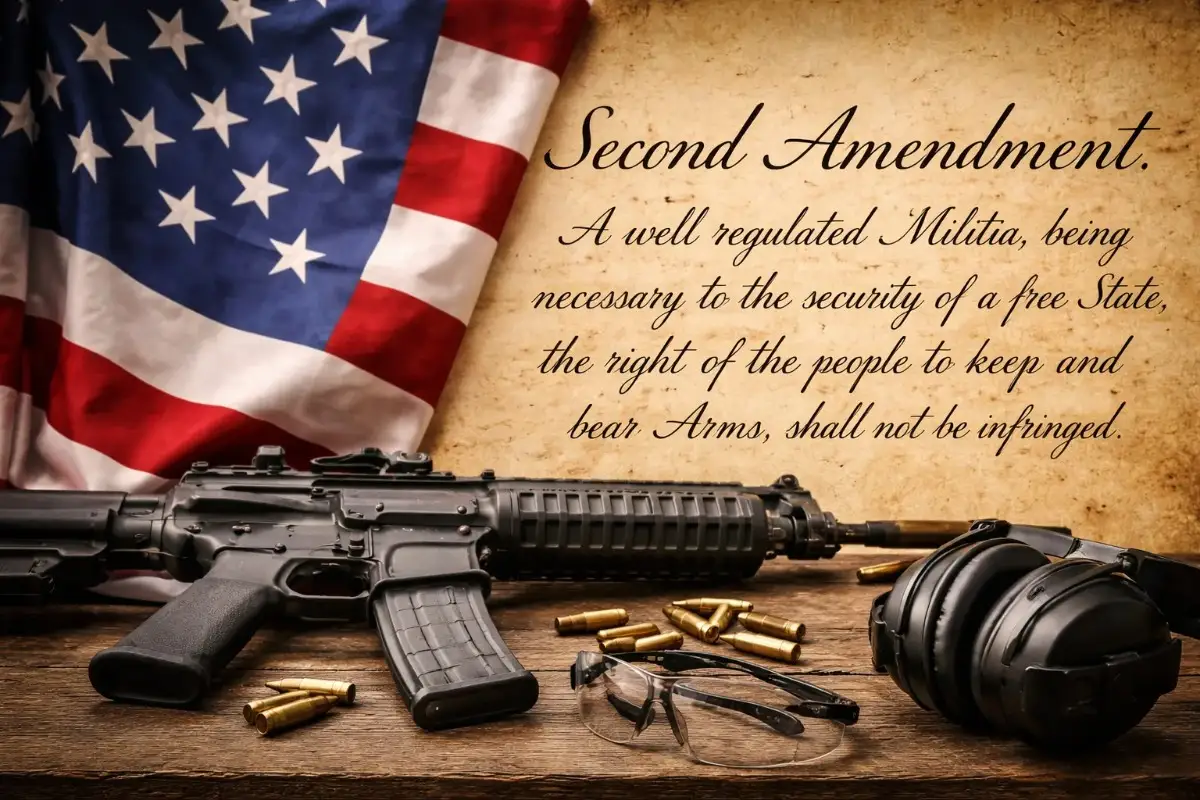
In August 2023, Rittenhouse formed the Rittenhouse Foundation, a Texas-based nonprofit with a stated mission of protecting legal rights. The organization’s founding documents include language from the Second Amendment and reflect his deepening involvement in gun-rights advocacy.
Texas Gun Rights and Political Activism
After moving to Texas following his acquittal, Rittenhouse became actively involved in Texas conservative politics. In June 2024, he was named outreach director for Texas Gun Rights, a state affiliate of the National Rifle Association. He appeared at political rallies, endorsed candidates, and collaborated with former Texas House representative Jonathan Stickland.
Campus Speaking Tour
Rittenhouse embarked on a college campus speaking tour, largely organized through Turning Point USA chapters. On these tours, he discussed the Second Amendment, his trial, and conservative political ideas.
In March 2024, he appeared at the University of Memphis, where he was met with significant protests — including demonstrators who had reserved seats to leave them empty. The event ended early after protesters inside the venue confronted him with pointed political questions he declined to answer.
He returned to the University of Memphis in February 2025, speaking without incident to a smaller group of approximately 40 people in a classroom rather than a theater. Under Tennessee’s Campus Free Speech Act, the university was required to allow the event even though it did not sponsor it.
Working at a Florida Gun Shop
In February 2025, Gulf Coast Gun & Outdoors in Milton, Florida, announced that Rittenhouse had joined their business as a full-time employee. The gun shop promoted a new rifle model, the “KR-15,” branded with his name. Rittenhouse has leaned into his identity as a Second Amendment advocate, using his public platform to promote gun ownership and gun culture.
Marriage and Return to Social Media
Rittenhouse largely stepped back from social media in early 2025, stating he needed peace and a fresh start. In December 2025, he returned to social media to announce that he had married Bella Nelson in a private ceremony in June 2025. The wedding announcement generated millions of views and a significant online debate.
The Broader Legal Legacy: What the Rittenhouse Case Changed
The Rittenhouse verdict reverberated far beyond Kenosha. It became a landmark reference point in ongoing national debates about several critical legal and social issues.
Self-Defense Law and Armed Civilians
The case brought intense scrutiny to self-defense statutes across the United States — particularly in states that do not impose a duty to retreat. Wisconsin law, like many states, allows the use of deadly force if a person reasonably believes they face imminent death or great bodily harm. This reasonable belief standard is inherently subjective, and the Rittenhouse verdict demonstrated how difficult it is for prosecutors to overcome a self-defense claim when video evidence is ambiguous, and multiple witnesses corroborate the defendant’s account.
Legal scholars debated whether the case would embolden armed civilians to insert themselves into protest environments, reasoning that a credible self-defense claim could protect them even if violence resulted.
Vigilantism vs. Citizen Defense
One of the most lasting legacies of the Rittenhouse case is the cultural and legal question it raised: where is the line between a citizen defending themselves and a vigilante endangering others?
Critics of the verdict argued that allowing an armed minor from out of state to patrol another city’s streets during civil unrest and then kill two people and walk free sent a dangerous message about the permissibility of armed political participation. Supporters argued that Rittenhouse represented exactly the kind of armed citizen the Second Amendment protects.
This debate has not been resolved. It surfaces repeatedly in subsequent high-profile cases involving armed civilians and protests.
The Role of Race in the Justice System
Though the victims were white, the Rittenhouse case became inseparable from the broader conversation about racial disparities in the American justice system. Many critics argued that had Rittenhouse been Black, the outcome from the initial interaction with police to the eventual verdict would have been radically different. This argument is inherently hypothetical but reflects genuine, documented disparities in how self-defense claims are treated across racial lines in American courts.
The Kyle’s Law Legislative Movement
Multiple states used the Rittenhouse acquittal as a launching point for legislation that would reimburse defendants found not guilty of homicide charges due to self-defense. These bills reflect a broader conservative push to make self-defense claims more legally advantageous for defendants.
The Destruction of the Rifle
In one lesser-noted legal development, attorneys for Rittenhouse and prosecutors agreed that the AR-15-style rifle used in the shootings would be destroyed rather than returned to Rittenhouse. Rittenhouse’s attorneys said he did not want someone to purchase it as a trophy. A Wisconsin judge approved the agreement, and the rifle was destroyed, ending any possibility of the weapon becoming a political artifact.
Common Misconceptions About the Rittenhouse Case
Given the intense politicization of this case, numerous factual errors have circulated widely. Here are the most important corrections:
Misconception: Rittenhouse crossed state lines illegally with a gun
The gun was already in Kenosha, stored by his friend’s stepfather. Rittenhouse drove across the state line separately. While crossing state lines with a firearm can raise legal questions, this specific framing was frequently used inaccurately.
Misconception: The victims were unarmed
Grosskreutz was armed with a Glock pistol. Huber used a skateboard as a weapon. Rosenbaum was unarmed, but testimony established he had made death threats and lunged for the rifle.
Misconception: Rittenhouse was acquitted on a technicality
The acquittal was on the merits of the self-defense claim, not on procedural grounds. Two charges were dismissed before the verdict, but the remaining charges were decided by the jury after extensive deliberation.
Misconception: The trial was about race
Rittenhouse and all three men he shot were white. The racial dimension of the case relates to its context (a Black Lives Matter protest) and broader questions about racial equity in the justice system, not to the racial identities of those directly involved in the shooting.
Conclusion
More than five years after the shootings in Kenosha, the Kyle Rittenhouse case remains a live and contested issue in American public life. Civil lawsuits continue. Legal scholars continue to debate the case’s implications. And Rittenhouse himself, now in his early twenties, remains a divisive public figure, appearing at political events, working in the gun industry, and maintaining a public presence focused on Second Amendment advocacy.
The case matters not because of Rittenhouse as an individual, but because of what it revealed about the pressure points in American society: the intersection of guns, protests, race, vigilantism, and a legal system that must translate deeply contested human events into the cold language of statutes and standards.
Whether you see Rittenhouse as a young man who defended his life in a terrifying situation, or as a vigilante whose reckless choices led to preventable deaths, the legal facts of the case are clear: a Wisconsin jury, following Wisconsin law, concluded that the prosecution failed to disprove his self-defense claim beyond a reasonable doubt.
Frequently Asked Questions (FAQs)
1. Was Kyle Rittenhouse found guilty or not guilty?
Kyle Rittenhouse was found not guilty on all charges on November 19, 2021. A jury of 12 returned a unanimous verdict after approximately 27 hours of deliberations spread over four days.
2. Why was Rittenhouse found not guilty if he admitted to the shootings?
Rittenhouse admitted to shooting all three men but claimed self-defense in each instance. Under Wisconsin law, once a defendant raises a credible self-defense claim, the burden shifts to the prosecution to disprove it beyond a reasonable doubt.
3. Did Kyle Rittenhouse cross state lines illegally with a gun?
This claim is frequently made but is misleading. The rifle Rittenhouse used was already in Kenosha, Wisconsin, stored at the home of his friend Dominick Black’s stepfather. Rittenhouse drove from his home in Antioch, Illinois, to Kenosha separately and collected the weapon there.
4. Are there ongoing lawsuits against Kyle Rittenhouse?
Yes. As of 2025, two civil lawsuits involving Rittenhouse remain active in federal court. The family of Anthony Huber, one of the men Rittenhouse killed, filed a federal civil lawsuit against Rittenhouse and Kenosha law enforcement agencies.
5. What has Kyle Rittenhouse been doing since his acquittal?
Since his acquittal in 2021, Rittenhouse has become a prominent figure in conservative and gun-rights circles. He launched the Media Accountability Project, claiming to pursue defamation lawsuits against media organizations.