Your mobile home ceiling is showing its age. Maybe it’s yellowing. Maybe it’s sagging. Maybe it’s covered in water stains from a roof leak three years ago. Whatever the problem, replacing your ceiling panels is one of the fastest ways to transform your home, and you don’t need a contractor to do it.
This guide covers everything: the best panel materials for manufactured homes in 2026, real installation steps, updated cost breakdowns, and answers to the questions most guides skip entirely. Whether you’re patching one damaged section or replacing your entire ceiling, you’ll know exactly what to do by the end.
Why Mobile Home Ceilings Are Different
Most ceiling guides are written for site-built homes. Mobile home ceilings are a different challenge entirely. Understanding these factors helps you choose the right material the first time. Let’s walk through your options. Here’s what makes them unique.
Lower Clearance
Most manufactured homes have 7–8 feet of vertical space. That limits your material choices and makes installation harder to manage on your own.
Lighter Framing
Mobile home roof structures aren’t built to hold heavy materials. Weight matters when choosing panels. PVC panels, for example, weigh roughly 40% less than drywall, a meaningful difference for your structure.
More Movement
Mobile homes flex with temperature changes and transport stress. Materials that crack under pressure, like rigid gypsum or poorly secured tiles, will fail faster.
Moisture is a Constant Threat
Poor roof drainage, condensation, and humidity make moisture resistance a top priority, not a nice-to-have.
Types of Mobile Home Ceiling Panels: A Full Comparison

1. Gypsum Panels
Gypsum panels are what most older manufactured homes came with from the factory. They’re lightweight, affordable, and paintable. But they have real limitations.
The biggest problem is that gypsum panels used in mobile homes are thinner (5/16″ thick) than standard drywall and don’t have the same paper wrapping. They’re more fragile, harder to find as replacements, and sensitive to any moisture. If you’re replacing damaged gypsum panels, sourcing matching panels can be nearly impossible. The most common brand (SeaSpray/C-Spray by National Gypsum) is only sold at specialty mobile home supply stores.
Best for: Living rooms and bedrooms with no moisture exposure.
Not ideal for: Bathrooms, kitchens, or homes in humid climates.
Cost: $1.00–$1.80 per sq ft for material.
2. PVC (Vinyl) Panels
PVC panels have become the go-to choice for mobile home ceiling replacement and for good reason. They’re 100% waterproof, mold-resistant, and built to handle the movement and humidity that manufactured homes experience.
The trade-off is cost. PVC panels run higher upfront than gypsum or fiberboard. But when you factor in durability, zero repainting costs, and minimal repairs over time, the long-term value is strong.
Modern PVC panels come in white, gray, and faux-finish options. Some newer products, like Trusscore Wall & Ceiling Board, are available in 8, 10, 12, 14, 16, and 20-foot lengths, ideal for mobile home ceiling spans.
Best for: Bathrooms, kitchens, laundry areas, and whole-home replacement.
Cost: $2.00–$3.50 per sq ft for material.
3. Beadboard Panels
Beadboard is one of the most popular aesthetic upgrades for mobile home ceilings. The narrow grooves (the beads) create a classic, cottage-style look and also disguise seams between panels, which matters a lot during installation.
Beadboard comes in wood, MDF, composite, and PVC versions. The PVC option gives you the look of wood with the durability of vinyl. For mobile homes, the 5/16″-thick tongue-and-groove planks (3.5″ wide by 8 feet long) are the most popular size. Clip-based beadboard systems (like Armstrong’s Woodhaven) make installation even easier, with no nailing required.
Best for: Living rooms, bedrooms, and anywhere you want a warm, finished look.
Cost: $2.50–$4.50 per sq ft (clip systems on the higher end).
4. Drywall / Standard Gypsum Board
Drywall produces the smoothest, most finished-looking ceiling available, but it’s the hardest to install. It’s heavy (a problem for mobile home framing), requires taping, mudding, and finishing, and is unforgiving of mistakes.
If you’re comfortable with the process and have help, drywall delivers a high-end result that looks indistinguishable from a site-built home. It’s the most popular material for full ceiling replacement projects. Important distinction: standard drywall and mobile home gypsum panels are not the same thing. Don’t confuse the two.
Best for: Full renovations where appearance is a top priority and structural support has been verified.
Cost: $0.50–$1.20 per sq ft for material; higher labor costs apply.
5. Fiberboard Panels
Fiberboard is affordable and provides a smooth, paintable surface. It’s a step up from gypsum panels in terms of look, but shares the same weakness: moisture sensitivity. Without proper sealing, fiberboard will absorb humidity and develop mold.
Best for: Dry living spaces on a tight budget.
Cost: $1.20–$2.00 per sq ft.
6. Wood Planks
Wood planks have a growing fan base among mobile home renovators, especially in farmhouse and rustic styles. Pine is the most popular and affordable finance option. Shiplap creates clean horizontal lines. Reclaimed wood delivers character that no manufactured panel can match.
Weight is the primary concern. Stick to thinner planks and always verify your ceiling joists can handle the added load before installing.
Best for: Accent ceilings, master bedrooms, and rustic-style renovations.
Cost: $3.00–$6.00+ per sq ft, depending on wood type.
7. Acoustic & Soundproofing Panels
One of the fastest-growing categories in 2025–2026 is acoustic ceiling panels for mobile homes. These panels, typically featuring veneered lamellas over recycled acoustic felt, reduce noise transfer between rooms and create a quieter living environment.
They’re heavier than standard panels, so they’re best used selectively (bedrooms, home offices, media rooms) rather than whole-home. They install on a standard grid or directly to the ceiling surface.
Best for: Bedrooms, home offices, and media rooms.
Cost: $4.00–$8.00+ per sq ft for quality acoustic panels.
8. Eco-Friendly & Low-VOC Panels
A growing number of manufacturers now offer ceiling panels made from recycled content with low-VOC (volatile organic compound) finishes. These are particularly valuable in mobile homes, where smaller interior volumes mean indoor air quality matters more.
Look for products that specify low-VOC adhesives and recycled post-consumer content. This category is expanding rapidly as sustainability standards tighten.
Best for: Health-conscious homeowners and green renovation projects.
9. Smart Panels with Integrated LED Lighting
The newest category in mobile home ceiling upgrades: panels with built-in LED lighting channels. These systems eliminate the need for separate light fixtures and create a seamless, modern ceiling plane.
They’re more expensive and require basic electrical knowledge to install, but the effect, especially in low-ceiling spaces, is dramatic. They maximize headroom by eliminating the depth of pendant or recessed lighting.
Best for: Modern aesthetic renovations and spaces with height limitations.
2026 Cost Breakdown: What Will You Actually Pay?
Prices vary by region, brand, and quantity, but here’s a current, realistic estimate:
| Panel Type | Material Cost (per sq ft) | Labor Cost (per sq ft) | Total Installed Cost |
| Gypsum Panels | $1.00 – $1.80 | $2.00 – $4.00 | $3.00 – $5.80 |
| PVC / Vinyl Panels | $2.00 – $3.50 | $1.50 – $3.00 | $3.50 – $6.50 |
| Beadboard (PVC) | $2.50 – $4.50 | $2.00 – $3.50 | $4.50 – $8.00 |
| Drywall | $0.50 – $1.20 | $3.00 – $5.00 | $3.50 – $6.20 |
| Fiberboard | $1.20 – $2.00 | $2.00 – $3.50 | $3.20 – $5.50 |
| Wood Planks | $3.00 – $6.00 | $3.00 – $5.00 | $6.00 – $11.00 |
| Acoustic Panels | $4.00 – $8.00 | $3.00 – $5.00 | $7.00 – $13.00 |
Pro Tip
Always buy 10–15% more material than your measured square footage. You will have cuts, waste, and the occasional damaged panel. Running out mid-project and trying to match panels later is a headache you don’t need. For a standard single-wide mobile home ceiling (approximately 500–600 sq ft), expect total installed costs of:
- Budget replacement (gypsum/fiberboard, DIY): $500–$900
- Mid-range (PVC panels, some pro help): $1,750–$3,250
- Full renovation (wood or premium PVC, professional labor): $3,500–$6,600+
How to Install Mobile Home Ceiling Panels

Assess Before You Buy
Don’t start purchasing panels before you know what’s underneath your current ceiling. Before you begin installing any new paneling, it is crucial to remove a section of the old ceiling to thoroughly inspect the underlying structure. Your primary focus should be on identifying water damage or active leaks, as the roof must be repaired before any interior work proceeds.
Additionally, check the framing and insulation for signs of mold or rot, and examine the furring strips or joists for structural damage that might require repair. This is also the ideal time to evaluate your existing insulation levels to ensure your home remains energy efficient. If you find mold, stop. Address the moisture source and treat the affected area before any new panels go up.
Measure and Order Materials
Measure your ceiling length and width. Multiply for total square footage. Add 15% for waste. Note any unusual angles, vents, or light fixtures that will require cuts.
Prepare the Ceiling Frame
Proper installation requires that your new panels have a solid, dependable surface for attachment. You must first verify that all furring strips or joists are perfectly level and parallel to ensure a flat finish and prevent warping over time. It is also essential to replace any damaged structural members identified during the inspection to maintain the ceiling’s integrity.
Finally, if you are working in high-moisture areas like kitchens or bathrooms, ensure a moisture barrier is properly installed before the new panels go up to protect the framing from humidity and potential mold growth. For PVC tongue-and-groove panels, a level starting wall is critical. If your starting wall is off, every panel will compound the error.
Install Perimeter Trim
Most panel systems begin with a perimeter trim or J-channel that receives the edge of the first panel. Install this level around the entire perimeter of the ceiling before the first panel goes up.
Install Panels
For tongue-and-groove systems: start at one wall, interlock panels as you go, and nail or clip through the tongue at an angle to hide fasteners. For gypsum or fiberboard: use construction adhesive plus screws for a secure hold. Work in good lighting. Check the level every few panels. Don’t assume, straight verify.
Finish Edges and Seams
Cover exposed edges with trim or molding for a clean finish. For gypsum or drywall, tape and mud all seams before painting. For PVC panels, a simple wipe-down is all the finishing required.
Add Final Details
Install any light fixtures, vent covers, or smoke detectors. If you’re painting gypsum or fiberboard panels, use a mold-resistant ceiling paint, one coat of primer, and two coats of finish.
How to Fix a Sagging Mobile Home Ceiling
Not every ceiling problem requires a full replacement. If multiple panels are sagging across a large area, that’s a structural concern. Inspect your roof, your insulation, and your vapor barrier before applying any fix. If your panels are sagging but otherwise undamaged:
- First, confirm there’s no active water leak. A sagging ceiling almost always means moisture.
- Let the area dry completely for 48–72 hours.
- For minor sags in gypsum panels, use a wide-head ceiling panel adhesive, inject it behind the panel, then press and brace until cured.
- For more severe sags, replace individual panels rather than overlaying new material over a weakened structure.
Maintenance Guide by Material
PVC / Vinyl Panels
Wipe down with a damp cloth or mild cleaner every few months. No repainting needed. If a panel cracks (rare), individual panels can typically be replaced without disturbing the rest.
Gypsum Panels
Keep completely dry. If stained, spot-prime before repainting. Avoid scrubbing — gypsum surfaces scratch easily. Inspect annually for signs of moisture intrusion.
Beadboard
Dust regularly. Painted beadboard should be repainted every 5–7 years, depending on traffic. If moisture gets in, the grooves can collect mold. Keep them dry and sealed.
Wood Planks
Inspect annually for warping. Refinish or reseal as needed. In humid climates, ensure your home has adequate ventilation to prevent moisture buildup in the wood.
Drywall
Repaint every 5–10 years. Address any cracks quickly, as small cracks grow. Keep an eye on seam lines, which are often the first place moisture damage appears.
2026 Style Trends in Mobile Home Ceilings
The aesthetic landscape for mobile home interiors has shifted significantly. Here’s what’s trending now:
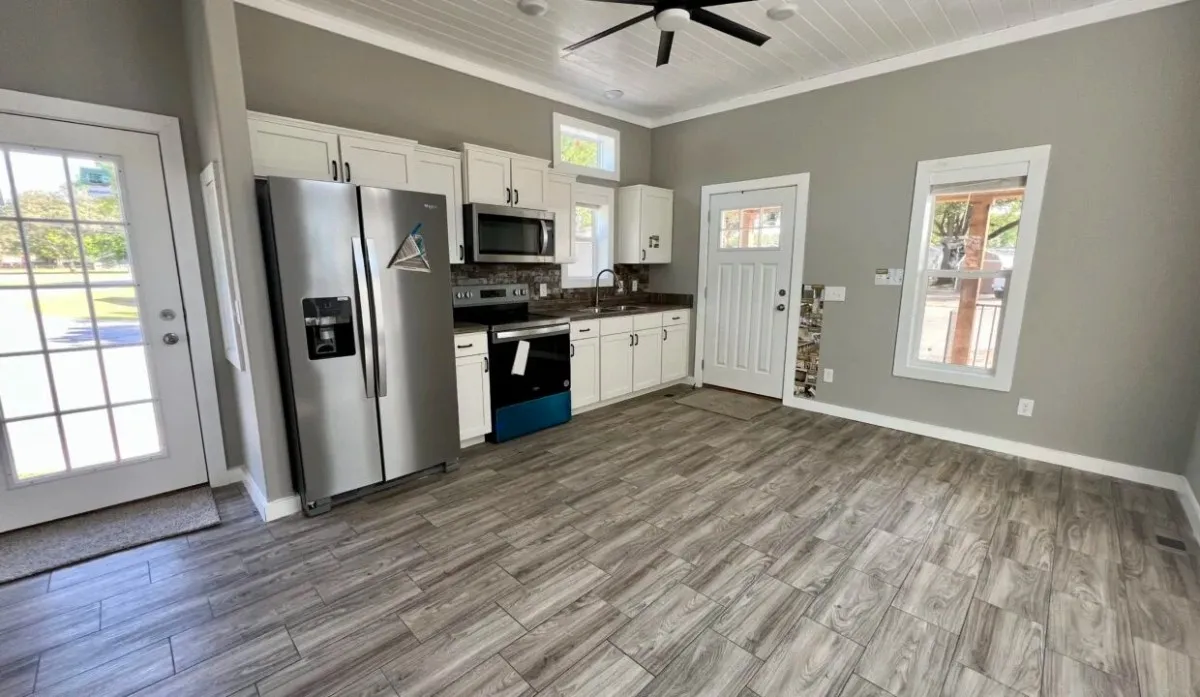
Modern Farmhouse Beadboard
The shiplap-on-walls look has migrated to ceilings. White-painted beadboard creates a clean, airy farmhouse feel that photographs beautifully.
Minimalist Smooth Panels
The heavy, embossed textures of the 1980s and 90s are being replaced by flat, smooth panels in white or soft gray. Clean and contemporary.
Faux Wood Grain PVC
Realistic wood-grain patterns in lightweight PVC, the look of reclaimed wood without the weight, cost, or maintenance.
Acoustic Slat Panels
Wood-veneer slats over acoustic felt, creating a modern, spa-like ceiling with genuine soundproofing benefits.
Integrated LED Systems
Especially popular in kitchens and living areas, where low ceilings make traditional fixtures feel cramped.
Conclusion
Mobile home ceiling replacement doesn’t have to be a daunting project. The right material choice is usually PVC for any moisture-prone area, beadboard or wood planks for aesthetic upgrades in dry spaces, and drywall for full renovations where you want a premium finish and can handle the installation process. Fix the moisture problem first. Always. Then choose your material. Then measure twice. The rest is manageable even for a first-timer.
Frequently Asked Questions (FAQs)
Can I put drywall on a mobile home ceiling?
Yes, but it’s not the easiest option. Standard drywall is heavier than the mobile home framing is designed to handle, especially in older manufactured homes. Before installing drywall, verify that your ceiling joists and furring strips can support the weight. If you want the look of drywall without the weight, PVC panels with a smooth finish are a practical alternative.
What’s the difference between gypsum panels and drywall in a mobile home?
Mobile home gypsum panels are thinner (typically 5/16″ thick) and don’t have the full paper wrapping of standard drywall. They’re less durable, more moisture-sensitive, and harder to source for replacement. Standard drywall is thicker and heavier, and it requires taping and finishing, but it produces a superior finished look.
Can I install new ceiling panels over old ones?
Sometimes, yes. If the existing panels are structurally sound, flat, and free of moisture damage, certain panel types can be installed over them. However, this adds weight, reduces clearance, and hides potential problems. Removing and inspecting is always the safer approach.
What’s the best ceiling panel for a mobile home bathroom?
PVC panels are the clear choice for bathrooms. They’re 100% waterproof, resist mold and mildew, and install with a watertight seal. Gypsum, fiberboard, and wood are poor choices for any moisture-heavy space.
How long does it take to replace a mobile home ceiling?
A DIY full ceiling replacement on a single-wide typically takes 2–4 days for one person with basic tools. PVC tongue-and-groove systems are faster than drywall. Professional crews can complete the same job in 1–2 days.
Do I need a permit to replace ceiling panels in a mobile home?
Cosmetic ceiling replacements generally don’t require a permit. However, if you’re changing structural elements, adding electrical systems (such as integrated LED systems), or the work affects habitability, check your local building codes. HUD-code manufactured homes have specific standards that may apply.
Are eco-friendly ceiling panels worth it?
For homeowners concerned about indoor air quality, yes. Mobile homes have lower interior air volume than site-built houses, which means off-gassing from materials (adhesives, finishes, panels themselves) has a proportionally bigger impact. Low-VOC options cost slightly more but meaningfully improve the air you breathe every day.
What is the lightest ceiling panel for a mobile home?
PVC panels are among the lightest structural ceiling materials available, weighing roughly 40% less than drywall. Foam ceiling tiles are even lighter but offer less durability. For mobile homes where weight is a structural concern, PVC tongue-and-groove offers the best balance of lightweight and long-term performance.