
Marketing has changed fast. Hiring a full in-house team is expensive. Agencies often feel disconnected. And AI is reshaping how decisions are made in real time. This is exactly why fractional marketing is no longer a trend; it’s becoming a core business model. In 2026, companies aren’t just experimenting with fractional talent. They are building entire growth strategies around it. This guide will help you understand what fractional marketing really is, how it works today, and whether it’s the right move for your business.
What Is Fractional Marketing?
Fractional marketing refers to hiring experienced marketing professionals, such as CMOs, strategists, or specialists, on a part-time or flexible basis. Instead of paying full-time salaries, businesses gain access to strategic leadership, execution support, and scalable resources, all without long-term commitments. Unlike freelancers, fractional marketers work as embedded partners within the organization rather than operating as external contributors.
Why Fractional Marketing Is Exploding in 2026
The rise of fractional marketing isn’t random; it’s driven by real business pressure.
Rising Costs of Talent
Hiring senior marketing professionals has become increasingly expensive and highly competitive in today’s market. Many businesses struggle to justify the cost of full-time salaries for top-tier talent. Fractional marketing offers a cost-effective alternative by providing access to experienced professionals without the full payroll burden. As a result, companies can significantly reduce expenses, often by up to 70%, while maintaining strong marketing performance.
Need for Specialized Expertise
Modern marketing spans multiple disciplines, including SEO, paid advertising, AI tools, analytics, and content strategy. Expecting a single full-time employee to master all these areas is unrealistic and inefficient. This skills gap often leads to underperformance or missed opportunities. Fractional marketing solves this by giving businesses access to specialized experts on demand, ensuring each area is handled by a professional.
Shift Toward Flexible Work Models
The rise of remote work has transformed how businesses approach hiring and team building. Companies are no longer limited to local talent and can now access skilled professionals from around the world. This shift has encouraged the growth of flexible, distributed marketing teams rather than traditional office-based departments. Fractional marketing aligns perfectly with this trend, offering agility and global expertise.
Faster Decision-Making with AI
Today’s marketing environment relies heavily on real-time data and quick decision-making. Fractional marketers often leverage advanced AI tools to stay ahead of trends and optimize performance. These tools enable faster data analysis, immediate campaign adjustments, and more accurate trend predictions. As a result, businesses can make smarter decisions and respond quickly to changing market conditions.
Marketing Complexity Is Increasing
The digital marketing landscape is becoming more complex as competition continues to grow rapidly. With the global market projected to reach $1.5 trillion by 2030, businesses must navigate an increasingly crowded space. This complexity requires advanced strategies, tools, and expertise to stand out effectively. Fractional marketing provides the flexibility and specialized knowledge needed to manage and succeed in this evolving environment.
The Evolution: From Freelancers to Fractional Pods
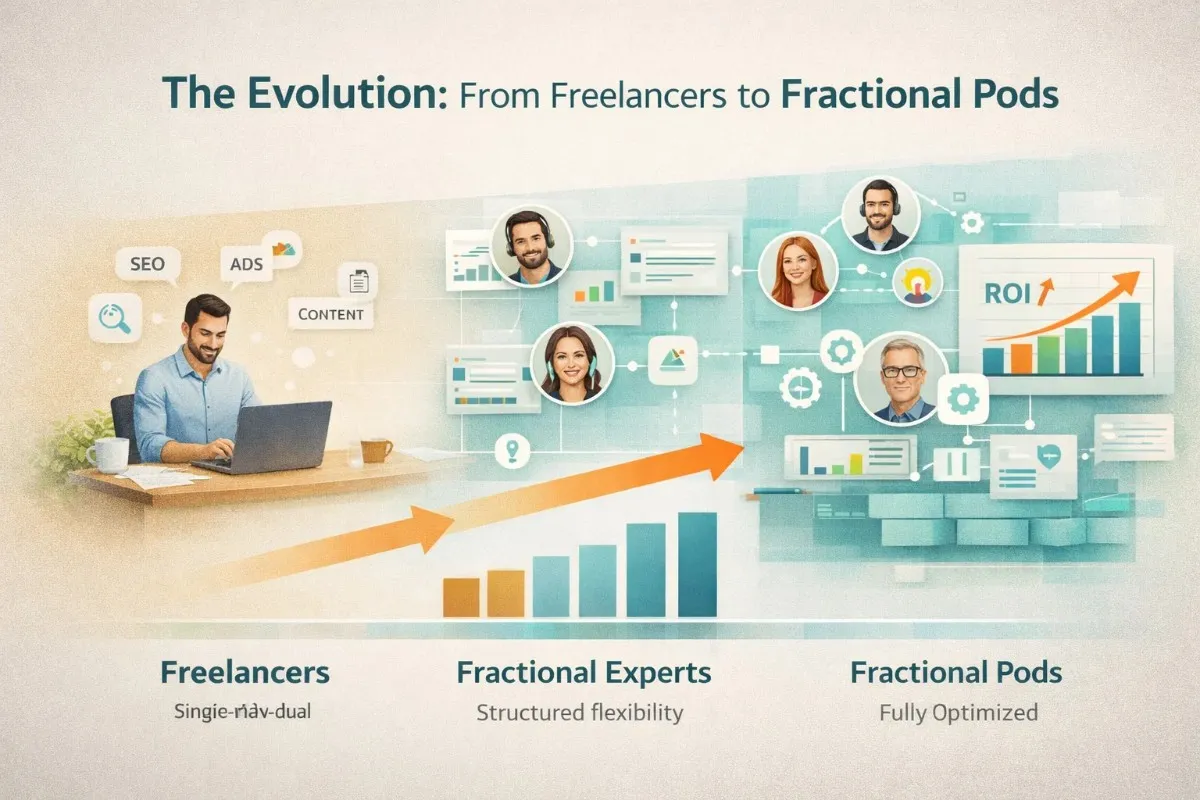
One of the biggest shifts in 2026 is the transition from relying on individual experts to adopting fractional pods. Instead of hiring a single professional, companies are now bringing in a complete team that includes a strategist, an analyst, and an execution team, all bundled together. This integrated approach ensures that every aspect of marketing is handled collaboratively and efficiently. As a result, businesses benefit from improved performance, greater consistency, and more cohesive strategies.
Fractional Marketing vs Traditional Models
| Model | Cost | Flexibility | Expertise | Speed |
|---|---|---|---|---|
| In-House | High | Low | Limited | Slow |
| Agency | Medium-High | Medium | Generalized | Medium |
| Fractional | Low-Medium | High | Specialized | Fast |
Benefits of Fractional Marketing
Scalability
Fractional marketing allows businesses to scale their efforts up or down as needed. This flexibility ensures resources match current goals and budgets. It helps companies stay agile in changing market conditions.
Access to Senior Talent
Businesses gain access to highly experienced professionals instead of relying on junior staff. These experts bring proven strategies and industry insights. This leads to stronger decision-making and better outcomes.
Faster Execution
Fractional teams are highly focused on delivering results quickly and efficiently. Their streamlined approach reduces delays and unnecessary processes. This enables faster campaign launches and performance improvements.
Strategic and Tactical Balance
Fractional marketers provide both high-level strategy and hands-on execution. They not only implement tasks but also guide overall business decisions. This balance ensures alignment between goals and actions.
Cost Efficiency
With fractional marketing, businesses pay only for the services they need. This eliminates the burden of full-time salaries and overhead costs. It results in better budget utilization without compromising quality.
The Hidden Truth: When Fractional Marketing Fails
This is where many articles can be misleading. Fractional marketing does not work effectively if you expect execution without a clear strategy, if your internal team resists collaboration, or if you fail to define specific goals from the start. It also falls short when businesses treat it as cheap outsourcing rather than a strategic partnership. The biggest mistake, however, is hiring a fractional CMO without having a proper system in place to execute their strategy.
The Role of AI in Fractional Marketing
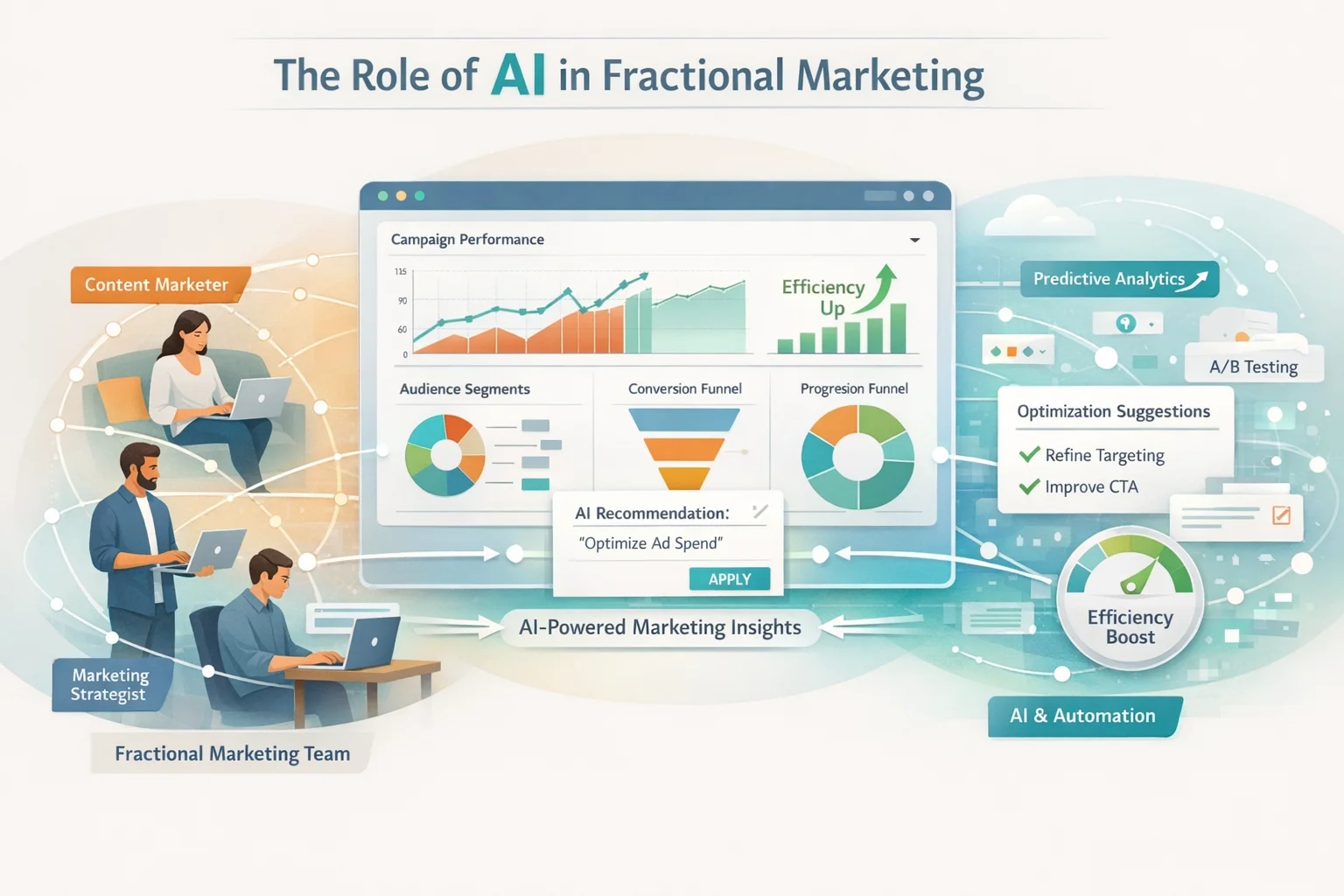
AI is not replacing fractional marketers; it is amplifying their capabilities. Modern workflows now incorporate tools like predictive analytics, automated reporting, audience segmentation, and content optimization to enhance performance. As highlighted in community insights, AI helps fractional marketers reduce guesswork and focus more on strategic decision-making. The real advantage lies in the combination of speed and clarity, enabling more precise and effective marketing outcomes.
The Rise of the Fractional Consumer
Today’s customers behave very differently from those of the past. They constantly switch between devices, consume fragmented pieces of content, and make decisions more quickly than ever before. This shift toward “fractional attention” means marketing strategies must adapt by being simple, fast, and highly relevant. As a result, attention is now spread across multiple platforms, requiring brands to communicate more efficiently and consistently.
When Should You Use Fractional Marketing?
Fractional marketing is an ideal solution if you are scaling a startup, lack senior marketing leadership, or are struggling with inconsistent campaigns. It is especially valuable when your business needs clear direction and strategic guidance rather than just basic execution. This approach ensures that your marketing efforts are aligned, focused, and driven by experienced professionals.
When You Should NOT Use It
Fractional marketing may not be the right fit if your business requires daily, full-time leadership or operates in a highly complex environment that demands constant oversight. It can also be ineffective if you lack an internal team or resources to execute the strategies provided. In such cases, a more traditional full-time setup may be better suited to your needs.
How to Implement Fractional Marketing (Step-by-Step)
Step 1: Define Your Goals
Start by clearly identifying what you want to achieve through fractional marketing. This could include growth, lead generation, or brand building. Clear goals set the foundation for the entire strategy.
Step 2: Identify Gaps
Analyze your current marketing setup to find missing elements. These gaps may exist in strategy, execution, or analytics. Understanding them helps you focus on what needs improvement.
Step 3: Choose the Right Model
Select a structure that fits your business needs, such as an individual expert, a fractional pod, or a hybrid team. Each model offers different levels of support and specialization. The right choice depends on your goals and resources.
Step 4: Set KPIs
Define clear and measurable key performance indicators to track success. These KPIs help you evaluate progress and performance effectively. Without them, it becomes difficult to measure impact.
Step 5: Integrate with Internal Team
Ensure smooth communication between fractional marketers and your internal team. Collaboration is essential for alignment and efficiency. Strong integration leads to better execution and results.
Cost of Fractional Marketing in 2026
The cost of fractional marketing in 2026 varies with the level of expertise and the services required. A fractional CMO typically charges between $10,000 and $12,000 per month. However, when properly implemented, this investment can deliver a strong return on investment, with potential gains ranging from 3x to 10x.
Common Mistakes to Avoid
Common mistakes to avoid in fractional marketing include basing decisions on price alone rather than value and ignoring cultural fit between the business and the marketing team. Another frequent issue is the lack of a clear reporting structure, which can lead to confusion and inefficiency in execution. Additionally, many businesses make the mistake of expecting instant results, even though effective marketing strategies require time to optimize and deliver meaningful outcomes.
Future of Fractional Marketing
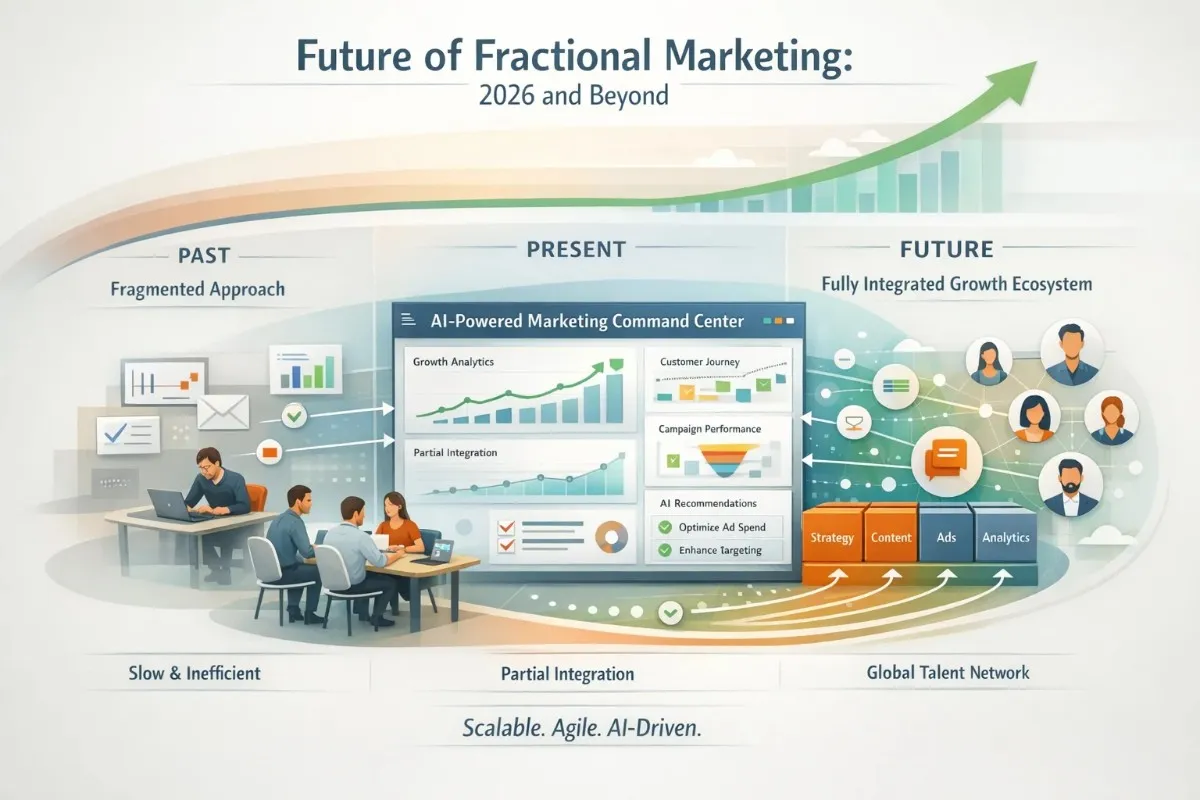
The future of fractional marketing is set to transform how businesses build and manage their teams. Looking ahead, more companies will adopt fractional-first structures, where flexible experts form the core of marketing operations. AI will also become a standard part of everyday workflows, enhancing efficiency and decision-making. As a result, marketing will become more modular, agile, and adaptable to changing demands. Fractional services are no longer seen as a temporary solution; they are quickly becoming the future of work.
Frequently Asked Questions (FAQs)
What is fractional marketing in simple terms?
Fractional marketing means hiring experienced marketing experts on a part-time or flexible basis. Instead of full-time employees, businesses get access to skilled professionals as needed. It’s a cost-effective way to bring in senior-level expertise without long-term commitments.
Is fractional marketing better than in-house?
For many businesses, fractional marketing can be more effective than in-house teams. It offers flexibility, specialized skills, and lower overall costs. However, the best choice depends on your company’s needs and structure.
How much does it cost?
Fractional marketing typically costs between $5,000 and $12,000 per month. The price depends on the scope of work and level of expertise required. More complex strategies usually fall at the higher end of this range.
Can AI replace fractional marketing?
AI cannot fully replace fractional marketing because human strategy is still essential. While AI improves efficiency and decision-making, it lacks strategic thinking. The best results come from combining AI tools with expert marketers.
Who should use fractional marketing?
Fractional marketing is ideal for startups, SMEs, and growing businesses. It helps companies access senior expertise without high full-time costs. This makes it especially useful for scaling and improving marketing performance.








)
&description=&image=https://whatinsights.com/wp-content/uploads/2024/09/fractional-marketing-roi-cost-reduction-strategy-1024x683.webp)